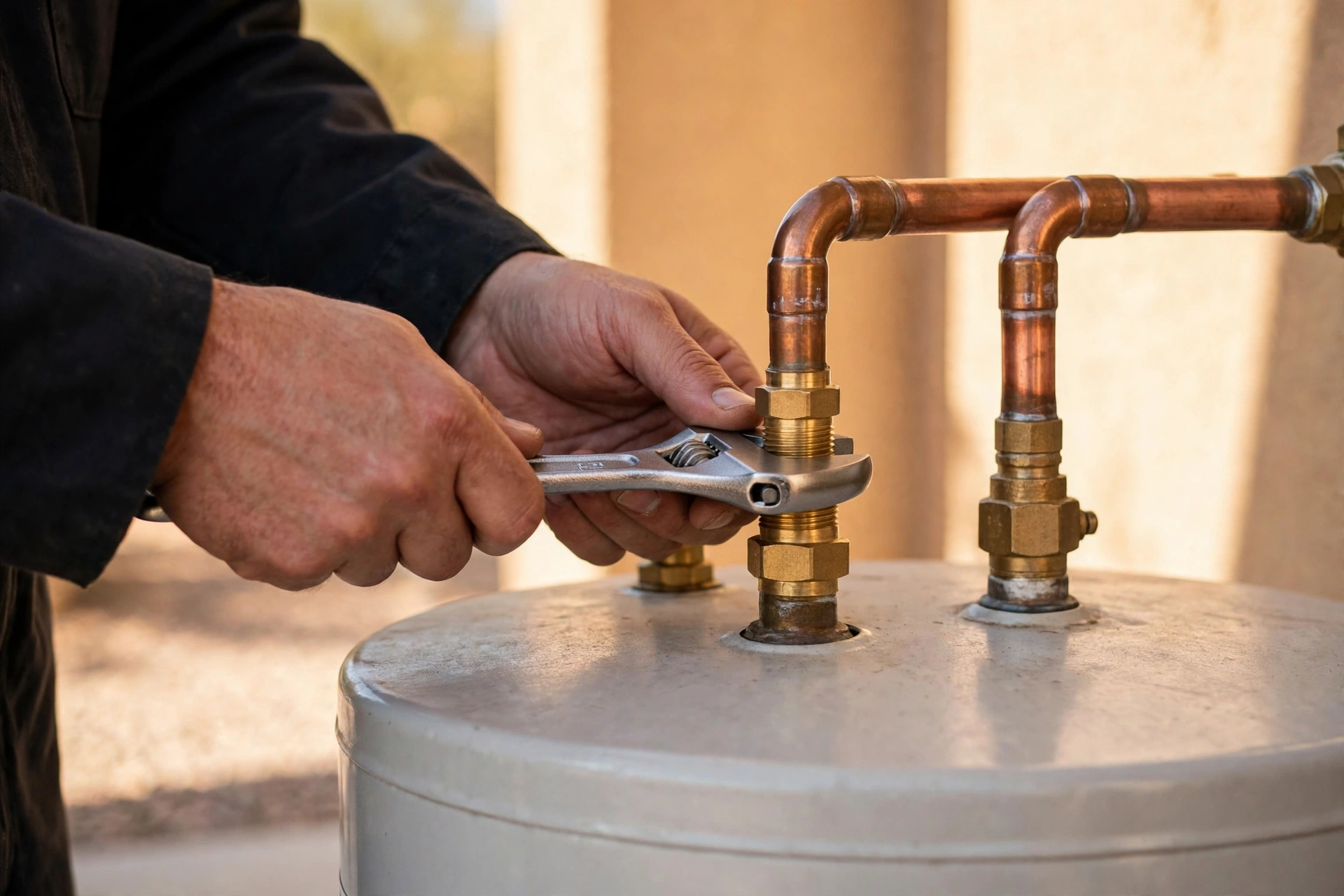
Water Heater Repair
Valley Water Heater Pros repairs gas and electric water heaters across Tempe, from failed heating elements to …
Learn moreWater heater emergencies do not respect schedules. The tank ruptures on a Sunday morning, the pilot dies the night before guests arrive, or you come home to water spreading across the garage floor. In those moments you need two things: someone who answers, and someone who fixes the actual problem instead of making it worse.
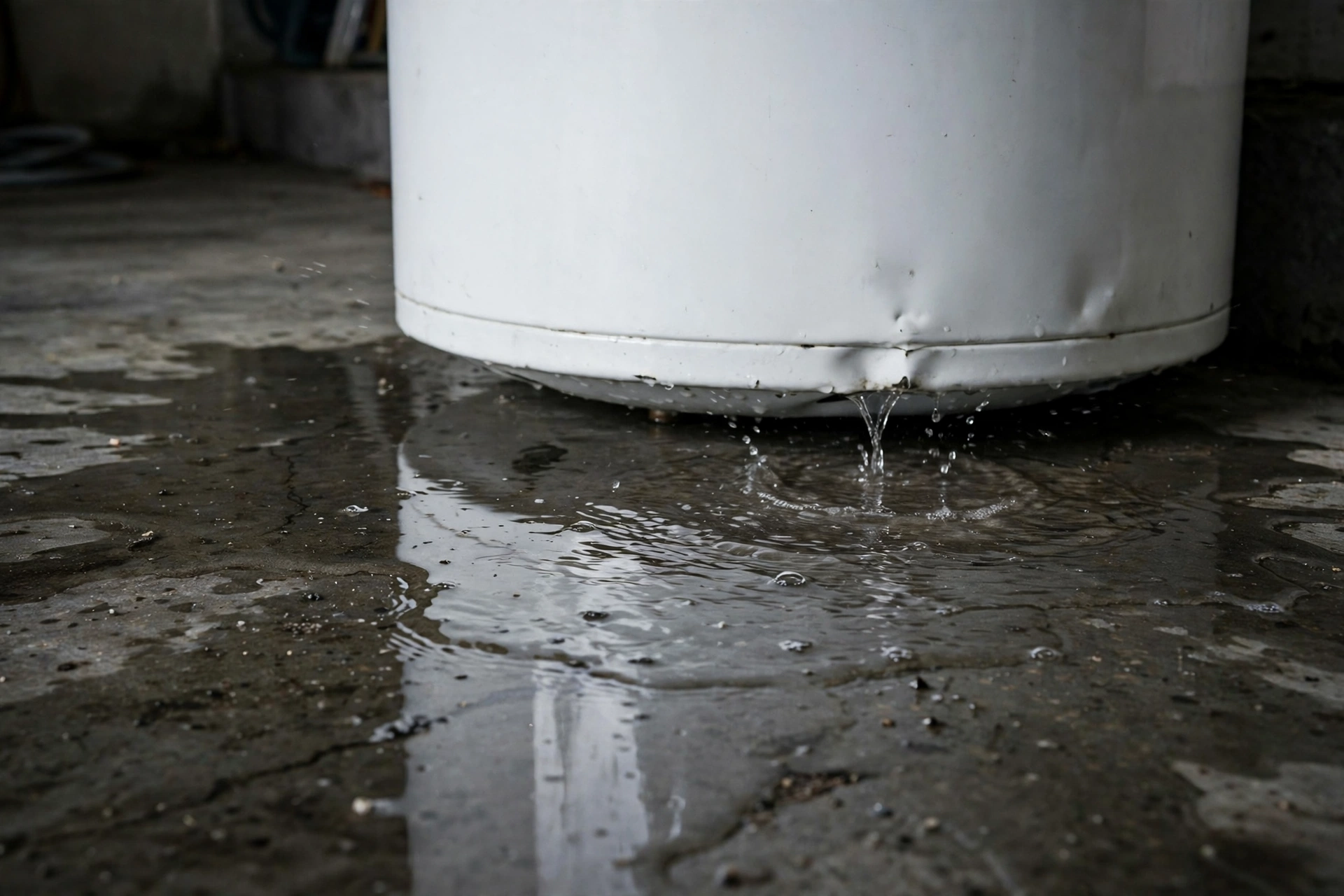
Valley Water Heater Pros treats emergency calls as the priority they are. We triage by severity, with active leaks and safety concerns jumping the queue, and our trucks carry the parts that resolve most Tempe water heater emergencies in a single visit. Here is what counts as an emergency, what to do while you wait, and what happens after we arrive.
Not every water heater problem needs same-day service, but several do. An actively leaking tank tops the list, because water damage compounds by the hour. No hot water counts too when it disrupts your household, especially for families with small children or anyone with medical needs that require hot water.
Safety concerns always qualify. The smell of gas near a gas unit, a TPR valve discharging heavily, scorch marks around the burner compartment, or water hot enough to scald at every tap all warrant an immediate call. When in doubt, call. We would rather talk you through a non-emergency than have you sit on a dangerous one. After-hours calls get the same triage. Nights and weekends do not change what counts as an emergency: active leaks, gas odors, and safety faults jump the queue regardless of the hour. If you are unsure whether your situation qualifies, call and describe it. We will tell you honestly whether it needs immediate attention or can wait for morning.
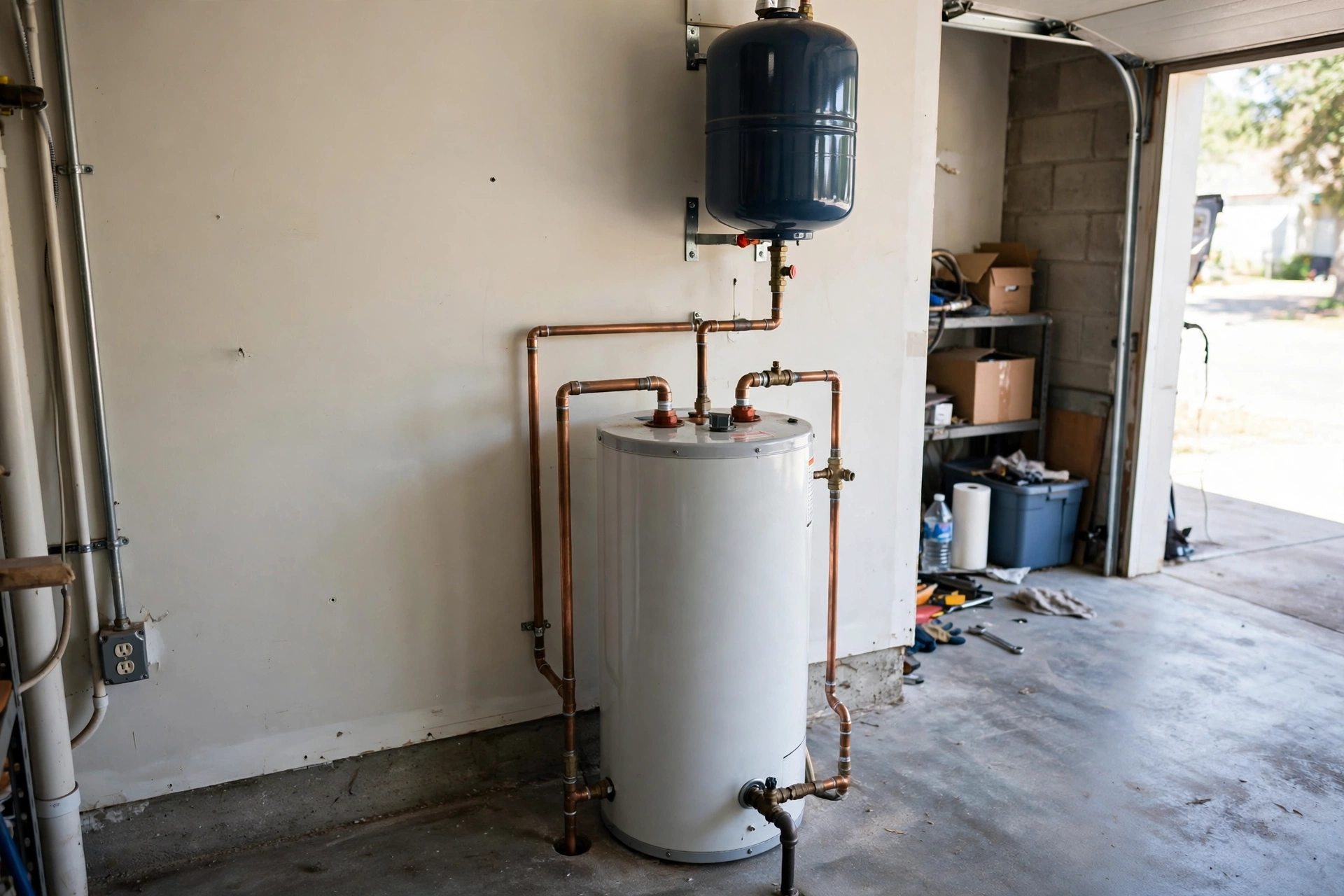
A few quick actions can limit damage while you wait. If water is leaking, shut off the cold water supply valve above the unit and turn off the fuel: the gas valve to pilot or off on gas units, the breaker on electric units. These two steps stop the flooding and remove the heat source in under a minute.
Do not try to drain the tank yourself unless you know it is cool and you have somewhere safe for the water to go. Do not touch electrical components with wet hands, and if you smell gas, leave the area and call from outside. Move valuables out of the water's path and keep the area around the unit clear so we can work the moment we arrive. If the leak is minor and you feel comfortable, placing towels or a shallow pan under the drip can buy time, but do not delay the important steps for it. Water and fuel shutoff come first. And if water is anywhere near electrical outlets, the breaker panel, or the unit's electrical compartment, treat the whole area as hazardous until power is confirmed off.
A leaking tank is a race against water damage. Once we arrive, we confirm the leak's source: tank body, fitting, valve, or connection. Fitting and valve leaks get repaired on the spot. A tank body leak means the steel has failed, and the only safe answer is replacement, which we can often begin the same day.
We also help you think through the water damage. Shutting off supply stops the source, but water already on the floor needs attention, especially in garages where it creeps under drywall and stored belongings. We will point out what needs drying and what to watch for, so a plumbing emergency does not become a mold problem weeks later.
Related: same-day replacement options
A surprising share of no-hot-water emergencies resolve quickly. Tripped breakers, failed upper elements, blown thermal fuses, and extinguished pilots account for many calls, and each has a fast, definitive fix when the diagnosis is right. We check these first because they restore your hot water fastest.
When the cause runs deeper, like a failed gas control valve or a tank full of hardened sediment that has cooked the lower element, we lay out your options honestly. Sometimes the fast fix is a proper repair. Sometimes the honest answer is that the unit is done and replacement starts today. Either way, you get hot water back on the fastest safe path. We also carry universal parts for the calls where the exact failed component is an uncommon size. Thermocouples, elements, and thermostats come in many variants, and our trucks stock the range Tempe homes actually use. That preparation is what makes single-visit resolution the norm rather than the exception.
Tempe's monsoon storms create a distinct category of water heater emergencies. Wind gusts extinguish pilot lights on garage-vented gas units. Driving rain finds its way into carport installations. Power surges from lightning trip breakers and fry control boards on newer electronic units.
After a major storm, check your pilot light and listen for normal burner operation before assuming the worst. If the unit will not stay lit or the electronics are dead, call us. We keep monsoon season in mind all summer, stocking the igniters, thermocouples, and control components that storms tend to claim, so storm-related outages get resolved fast. Lightning deserves special mention. A nearby strike can send a surge through household wiring that kills electronic ignition modules and control boards instantly. If your electronic unit died during a storm with no other symptoms, surge damage is a prime suspect. We test the electronics systematically rather than condemning the whole unit.
Related: standard water heater repair
Once the immediate crisis is resolved, we do not just leave. We explain what failed and why, show you the failed part when possible, and discuss what would prevent a repeat. Many emergencies trace back to deferred maintenance: the sediment that cooked an element, the anode rod that vanished years ago, the TPR valve nobody tested.
If we performed a temporary stabilization, we schedule the follow-up before leaving. If we replaced the unit, we set up its maintenance plan from day one. The goal is simple: this emergency should be the last surprise your water heater gives you, because from here on, it gets watched. We also leave you with a way to reach us for follow-up questions. Emergencies are stressful, and it is normal to think of questions after we leave. Whether it is about the repair, the maintenance plan, or just understanding what happened, we would rather answer than have you wonder.
Related: preventive maintenance plans, our Tempe service area
Describe what your unit is doing and we will help arrange the next step.
Shut off the cold water supply valve above the unit and turn off its fuel source: gas valve to off, or the breaker for electric units. Move valuables away from the water and call us. Do not try to repair a leaking tank yourself, and never touch electrical parts with wet hands.
Emergency calls jump to the front of our schedule, with active leaks and safety concerns first. We serve homes across Tempe and dispatch from within the Valley, so response is typically fast. When you call, we will give you a realistic arrival window and stick to it.
It can be. Beyond water damage, a leaking tank can indicate structural failure, and on gas units, water near the burner compartment creates additional hazards. Shut off the water and fuel, keep clear of the unit, and let a technician assess it. Most leaks are manageable once the supply is off.
If it goes out once and relights normally, it is usually a service call rather than an emergency. If it will not stay lit, you smell gas, or you see soot around the burner, treat it as urgent and call right away. Repeated outages often point to a failing thermocouple or venting issue we can fix.
Often, yes. We stock common tank sizes and can typically begin a replacement the same day the old unit is condemned. Less common sizes or fuel conversions may need a day for procurement. We will give you a straight timeline when we assess the failed unit.
Wind gusts blow out pilot lights, driving rain reaches units in carports and patios, and lightning-related power surges damage electronic controls and trip breakers. Dust storms also clog burner assemblies faster. After severe weather, a quick check of your pilot and burner operation catches most storm-related issues early.
Not seeing your question? Request service and describe what your unit is doing.
Request ServiceValley Water Heater Pros repairs gas and electric water heaters across Tempe, from failed heating elements to …
Learn more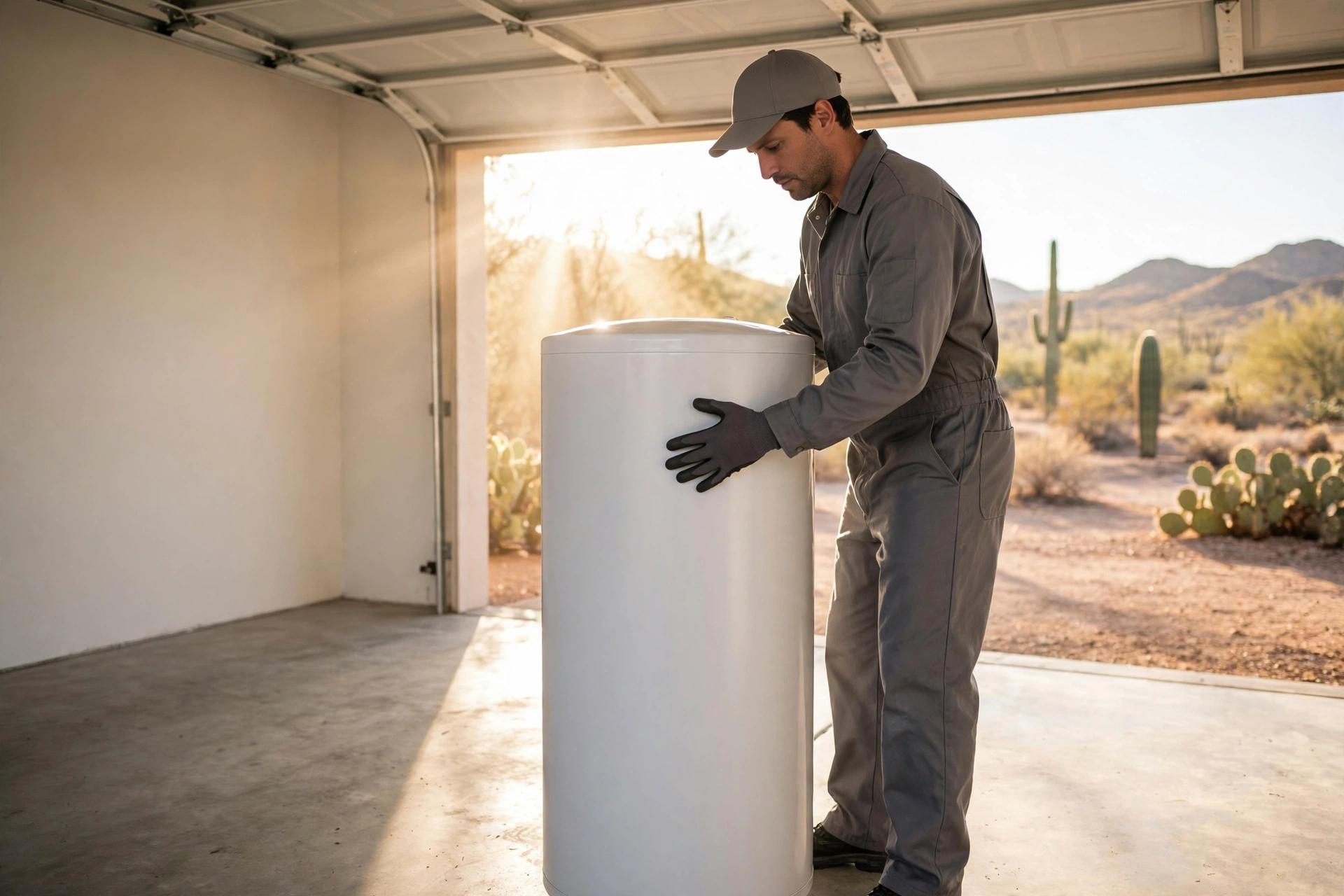
A new water heater installation in Tempe starts with sizing the tank to your household and choosing between ga…
Learn more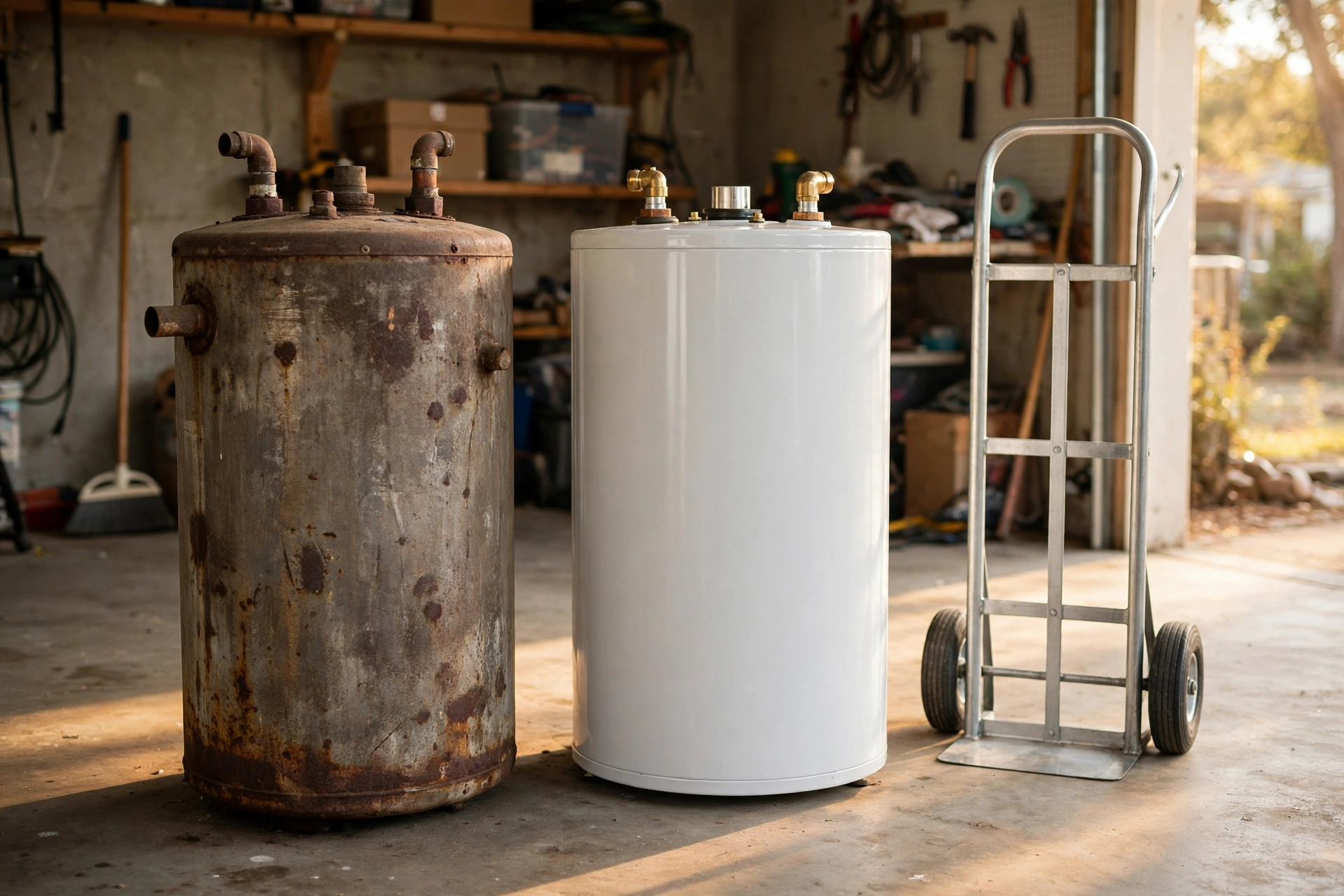
Water heater replacement makes sense when your tank is past its prime, leaking from the tank body, or costing …
Learn more