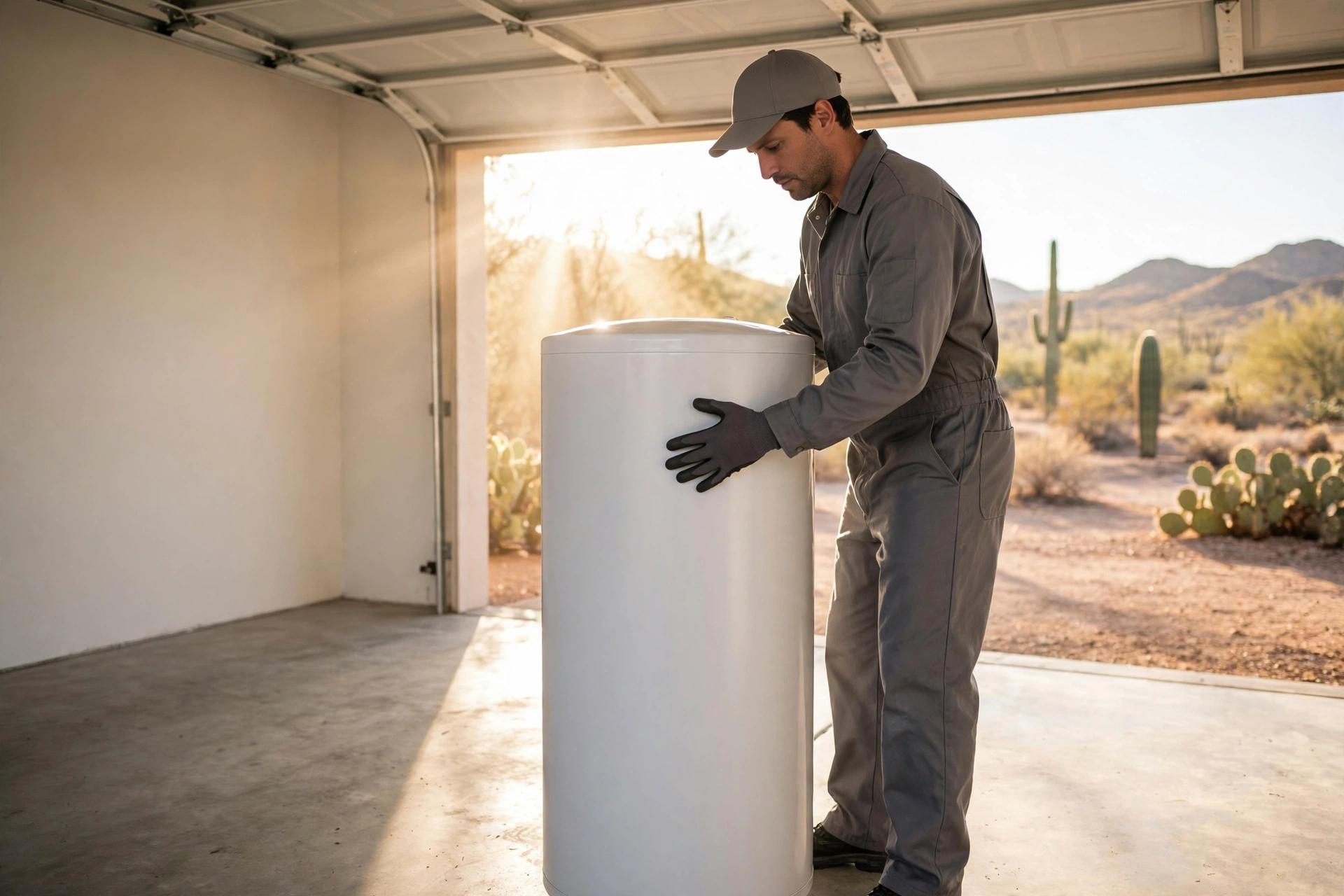
Water Heater Installation
A new water heater installation in Tempe starts with sizing the tank to your household and choosing between ga…
Learn moreFew things disrupt a Tempe household faster than a water heater that quits. You wake up to a cold shower, or you notice a puddle spreading across the garage floor, and suddenly the whole day revolves around one appliance. Valley Water Heater Pros exists for exactly these moments. We work only on water heaters, so every repair starts with deep familiarity with the tanks, burners, elements, and controls found in Tempe homes.
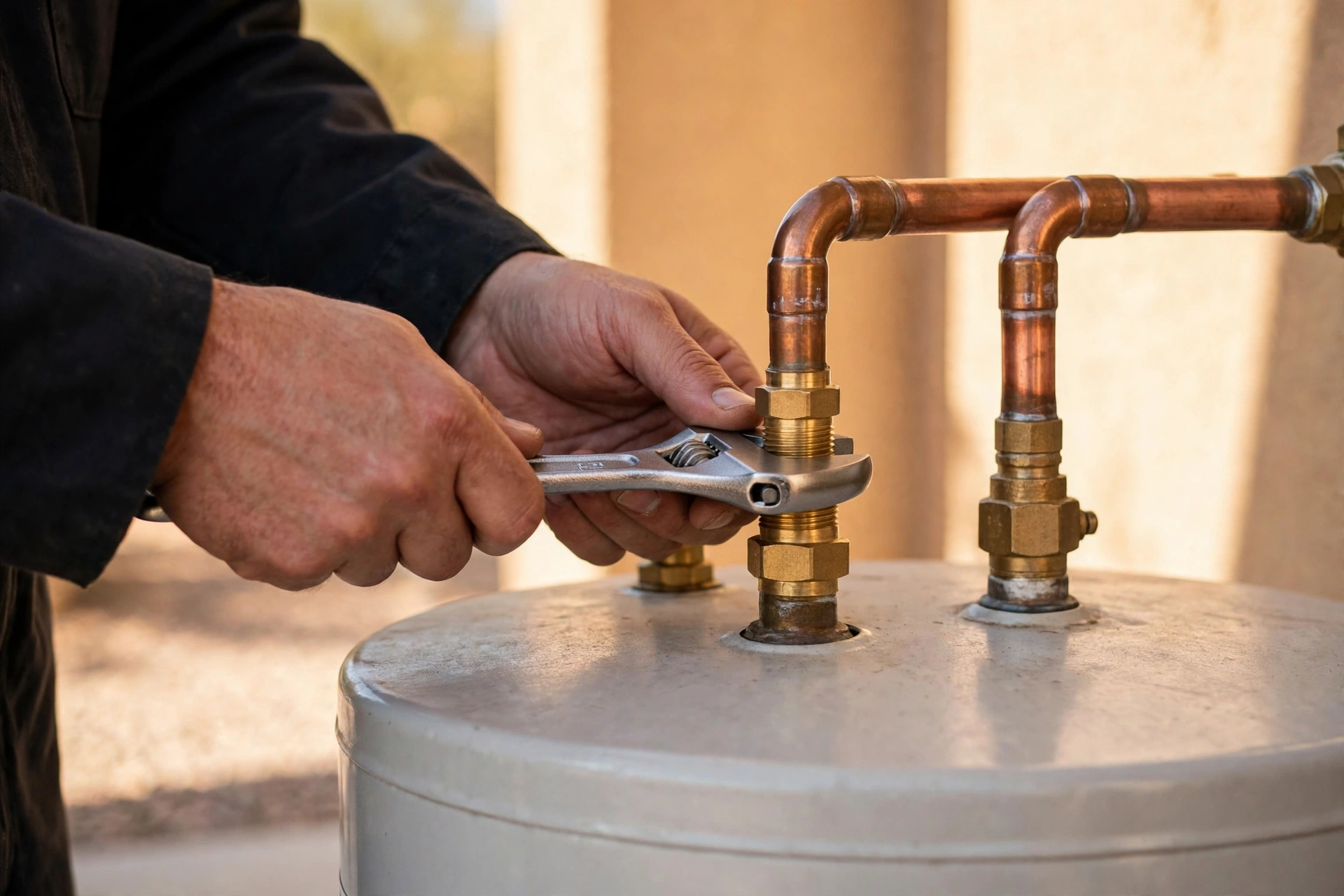
Desert conditions are hard on hot water equipment. Mineral-heavy water bakes sediment onto the bottom of tanks, summer garage temperatures climb past 115 degrees, and monsoon humidity finds its way into every pilot assembly. We diagnose with those local realities in mind, explain what we find in plain language, and fix the actual problem instead of guessing. Here is what breaks, how we find it, and how you can protect your repair.
Water heaters rarely fail without warning. They send signals for weeks or months, and learning to read those signals is the difference between a modest repair and a flooded garage. The most common early sign in Tempe is noise: rumbling, popping, or crackling sounds when the burner fires or the elements heat up. That noise is steam forcing its way through a layer of hardened sediment at the bottom of the tank.
Other clues are visual. Rust-colored hot water, moisture around the base of the tank, or a TPR valve that keeps dripping all point to trouble inside. And of course there is the obvious one: water that never gets hot, runs out too fast, or swings between hot and cold. If you notice any of these, it is time to have the unit looked at before a small fault turns into a tank failure.
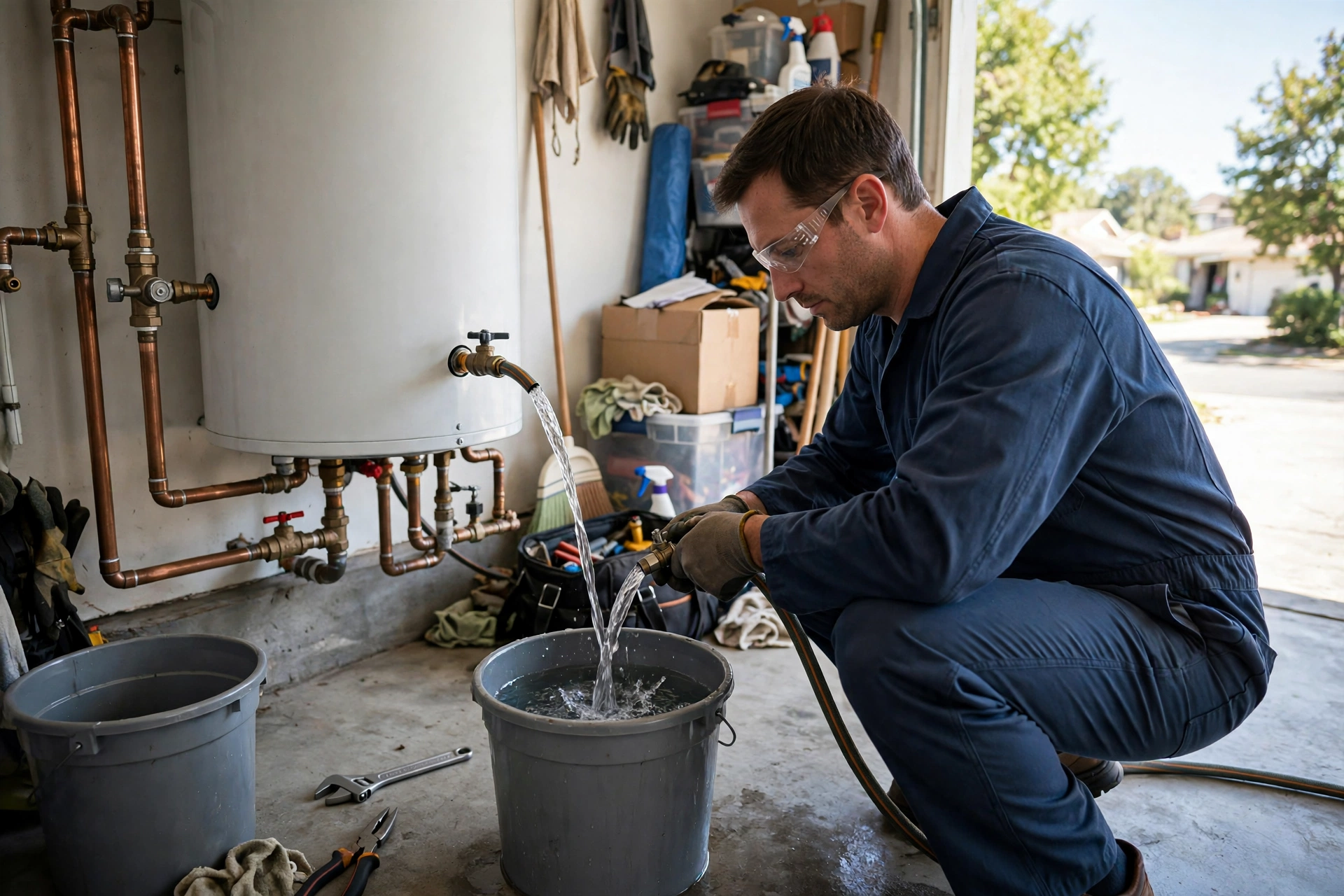
Tempe's municipal water supply carries 15 to 25 grains of hardness per gallon, which puts it firmly in the very hard category. Every gallon that enters your tank leaves behind a little calcium and magnesium. Over months and years, those minerals settle and bake into a thick sediment layer, especially when the burner or lower element keeps reheating the same sludge.
Sediment does more than make noise. It insulates the water from the heat source, forcing the burner to run longer and the elements to work harder. That extra strain shortens the life of thermostats, overheats the tank bottom, and speeds up corrosion of the anode rod and tank lining. In Tempe, a tank that never gets flushed can accumulate several inches of sediment in just a few years, which is why so many local repairs trace back to the same root cause.
Related: regular water heater flushing, Tempe homes
A good repair starts with a careful diagnosis, not a parts swap. When we arrive, we start by listening to your description of the symptoms and checking the basics: power or gas supply, thermostat settings, and the age of the unit. Many no-hot-water calls turn out to be a tripped breaker, a blown fuse on the disconnect, or a thermostat set far below the recommended 120 degrees.
From there we test the components themselves. On electric units we check both heating elements and thermostats with a meter, because a failed upper element produces very different symptoms than a failed lower one. On gas units we inspect the pilot assembly, thermocouple, burner, and venting. We also check the anode rod, the TPR valve, and the expansion tank when one is present, since these safety and longevity parts often fail quietly in the background.
Once we know exactly what failed, we explain your options in plain terms: what the repair involves, how long it should last, and whether the unit's age and condition make replacement the smarter move. You decide with full information, and we get to work.
After years of working on Tempe water heaters, we have seen the same failures repeat. Sediment-baked lower elements on electric units, thermocouples that no longer hold a pilot flame on gas units, and thermostats that drift out of calibration all top the list. Each of these is a straightforward repair when caught in time.
We also handle the messier jobs: leaking drain valves, corroded supply connections, failed expansion tanks, and dip tubes that have crumbled and left you with lukewarm water. What we will not do is patch a tank that is leaking from the tank body itself. Once the steel tank wall is compromised, no repair is safe or lasting, and we will tell you so directly.
Gas and electric water heaters share a tank and a thermostat, but almost nothing else, and their failures look different. Electric units tend to fail electrically: an element burns out, a thermostat sticks, or a breaker trips under load. Symptoms are usually clean cut, with either no hot water or water that runs out halfway through a shower.
Gas units add combustion to the mix. Pilot lights blow out during monsoon wind gusts, thermocouples weaken with heat cycling, and burners clog with dust drawn in from dusty garages. Gas repairs demand extra care around venting and combustion air, which is why our technicians check the vent path and draft on every gas service call, not just the part that failed.
Related: gas water heater services, electric water heater services
A repair fixes today's failure, but a few habits decide how long the fix holds. The single most valuable habit in Tempe is flushing sediment from the tank at least once a year. With 15 to 25 grains of hardness per gallon, skipping flushes lets sediment rebuild fast, and that sediment is what killed your element or overheated your tank bottom in the first place.
Keep the thermostat at 120 degrees, which is hot enough for comfortable showers and dishwashing while limiting scald risk and slowing mineral precipitation. Test the TPR valve every six months by lifting its lever briefly, and glance at the area around the tank now and then for moisture. Small attention between service visits adds years to a water heater's life in the desert.
Describe what your unit is doing and we will help arrange the next step.
Those sounds come from steam bubbles forcing their way through sediment that has settled and hardened on the bottom of the tank. Tempe's very hard water, at 15 to 25 grains per gallon, builds that sediment layer faster than in most cities. A professional flush usually quiets the tank, though very old units with heavy buildup may need the anode rod checked too.
Most common repairs, like replacing a heating element, thermostat, or thermocouple, are finished within a single visit once the diagnosis is done. We stock the parts that fail most often on Tempe units, which keeps return trips rare. Jobs involving corroded fittings or hard-to-reach garage installs can take a little longer, and we will tell you upfront.
If the leak is coming from a fitting, valve, or connection, yes, those can usually be repaired. If water is seeping from the tank body itself, the steel wall has failed and no safe repair exists. In that case we will recommend replacement and explain exactly why, so you are never paying for a fix that cannot hold.
Sediment takes up space at the bottom of the tank, so there is simply less room for hot water. A broken dip tube can also mix incoming cold water with the hot water at the top of the tank, which feels like the tank emptied early. Both problems are diagnosable in one visit, and both have straightforward fixes.
Yes, 120 degrees is the setting recommended for most households. It delivers comfortably hot water for showers, laundry, and dishwashers while reducing scald risk and slowing the mineral buildup that plagues Tempe tanks. Setting it higher wastes energy and can shorten the life of the tank and its components.
They can, especially gas units installed in garages or carports. Strong monsoon gusts sometimes blow out pilot lights, and wind-driven dust clogs burner assemblies faster. After a big storm, it is worth checking that your pilot is lit and listening for any new noises when the burner fires.
Not seeing your question? Request service and describe what your unit is doing.
Request ServiceA new water heater installation in Tempe starts with sizing the tank to your household and choosing between ga…
Learn more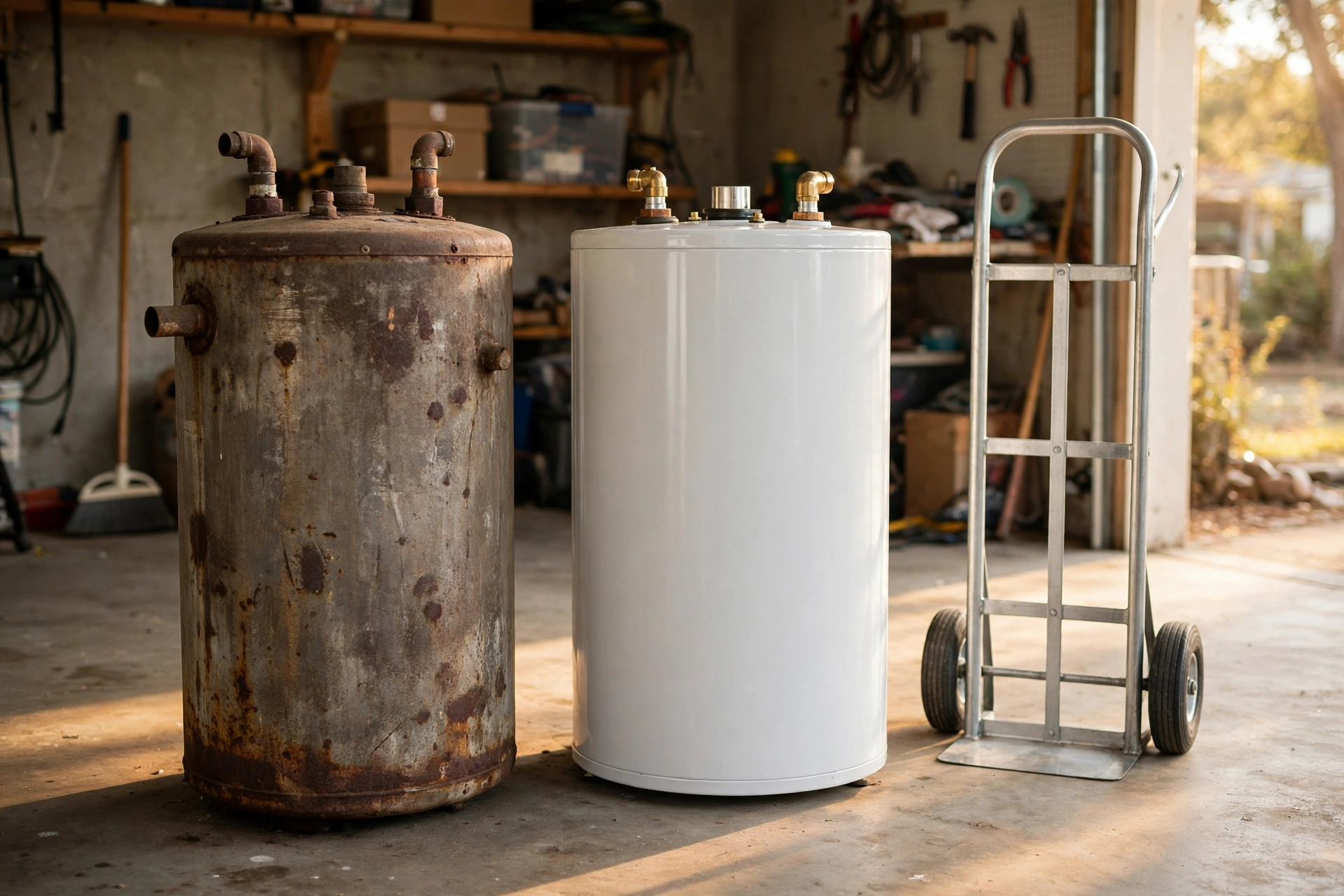
Water heater replacement makes sense when your tank is past its prime, leaking from the tank body, or costing …
Learn more
Tankless water heaters give Tempe homes endless hot water without a bulky storage tank, but our hard water dem…
Learn more