Mesa Water Heater Help for Hard Water Homes
Mesa is a city of contrasts when it comes to plumbing. Along the Superstition Freeway corridor, mid-century ranch homes on generous lots still run water heaters that have been quietly working for a decade. A few miles east, brand-new subdivisions are filling in with young families whose builder-grade tanks are already meeting Mesa's famously hard water for the first time. Valley Water Heater Pros connects homeowners across the 85201 ZIP code and beyond with independent contractors who understand both ends of that spectrum.
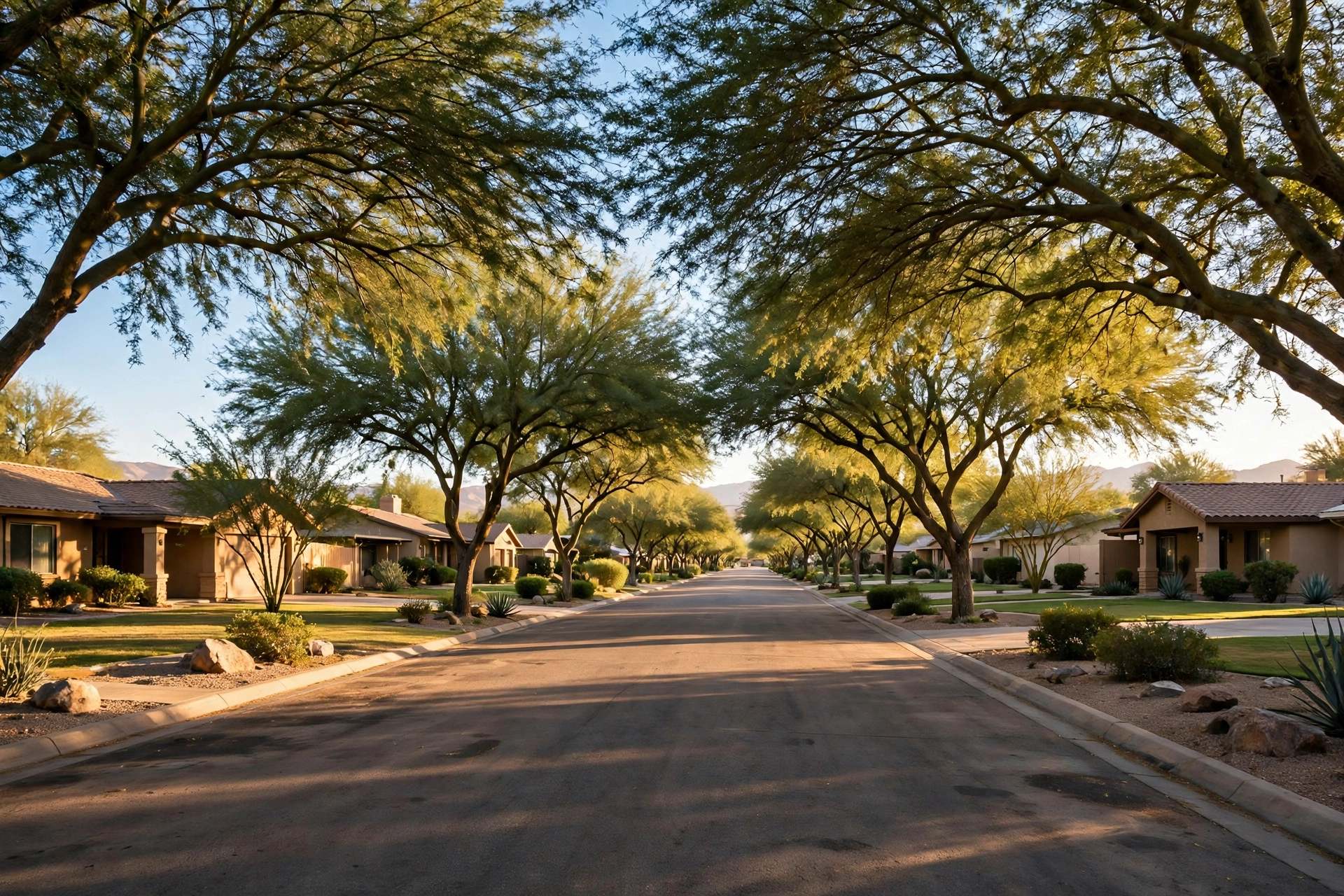
Serving Mesa, AZ 85201
What unites nearly every Mesa water heater is the water itself. At 15 to 25 grains per gallon, the Valley's hardness is among the highest in the country, and it punishes tanks that never get flushed. Add garage installs, because Arizona homes have no basements, plus summer heat that stresses every component, and you get a local lifespan of roughly 6 to 10 years. The good news is that most failures announce themselves first: strange noises, lukewarm showers, or dampness at the tank base all show up before the real trouble starts.
Ranch Homes Off the Superstition Freeway and Their Aging Tanks
The older ranch neighborhoods near the Superstition Freeway were built in an era when water heaters were expected to last 12 or 15 years. In Mesa's water and heat, that expectation no longer holds, but many of these homes still have tanks pushing past year ten. If your home dates to the 60s, 70s, or 80s and you cannot remember the last time the tank was replaced, it is worth checking the manufacture date on the label before trouble finds you.
These homes have a few quirks worth knowing. Original plumbing may include galvanized connections that corrode where they meet the tank, and garage layouts from that era sometimes put the water heater in awkward corners that make replacement trickier. An experienced contractor will spot those issues during a <a href="/water-heater-repair">repair</a> visit and can plan a replacement that updates the connections at the same time.
Large lots are a Mesa signature, and they often mean longer hot water runs from the garage to distant bathrooms. If the far bathroom takes forever to get hot water, that is a distribution issue as much as a heater issue, and it is worth mentioning when you call. Sometimes the right fix involves the tank; sometimes it is about the pipes between the tank and the tap.
Sediment: Mesa's Slowest and Most Expensive Problem
Hard water does its damage quietly. Every heating cycle leaves a little more mineral sediment at the bottom of the tank, and in Mesa's 15 to 25 grain water, that layer grows fast. Within a couple of unflushed years, the burner or elements are heating through inches of scale, which means longer run times, higher energy use, and a tank that sounds like it is percolating coffee.
The rumbling and popping noises are the classic tell, but sediment causes subtler problems too. Hot water that runs out sooner than it used to, a pilot light that struggles, or a faint rotten-egg smell from bacteria thriving in the sediment layer all trace back to the same cause. None of these mean the tank is dead, but all of them mean it is asking for attention.
A yearly <a href="/water-heater-maintenance">flush and maintenance visit</a> clears the sediment before it hardens and lets the contractor check the anode rod, the relief valve, and the thermostat in one trip. For Mesa tanks, this single habit is the difference between replacing at year six and replacing at year ten.
East Mesa Growth and Builder-Grade Water Heaters
East Mesa is adding rooftops fast, and most new homes arrive with a builder-grade tank: functional, basic, and sized to meet code rather than comfort. These units work fine at first, but they meet Mesa's hard water on day one with no head start. Homeowners in newer subdivisions are often surprised when a five-year-old tank starts showing sediment symptoms that their parents' tank took a decade to develop.
If you bought new in the last few years, find your tank's install date and start the annual flush habit now, while the sediment is still soft and easy to clear. Early maintenance on a young tank pays off far more than rescue maintenance on an old one. It is also the right time to learn where your shutoff valve is, before you ever need it in a hurry.
Growing families in east Mesa also tend to outgrow their tank's capacity. If the house came with a 40-gallon unit and you now have teenagers, the math may no longer work. Upsizing at replacement time, or discussing <a href="/tankless-water-heater-installation-repair">tankless options</a>, can end the morning hot water wars for good.
Garage and Attic Installs: Where Mesa Tanks Actually Live
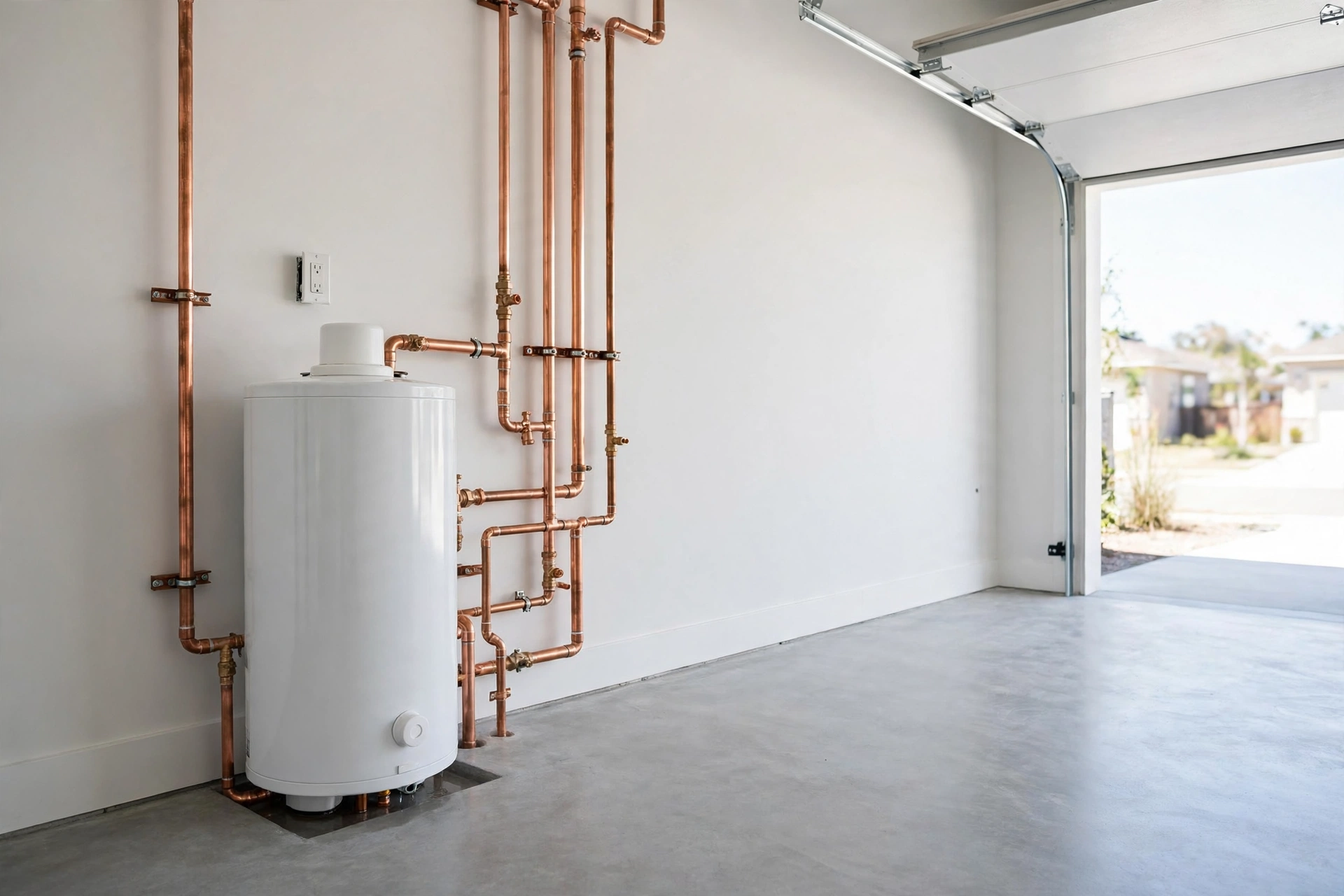
With no basements in Arizona construction, Mesa water heaters live in garages, and in some two-story homes, in the attic. Each location has its own failure mode. Garage tanks bake every summer and corrode a little faster in monsoon humidity. Attic tanks stay cooler but turn a leak into a ceiling disaster, which is why attic installs should always have a drain pan with a working drain line.
If your tank is in the attic, check the pan's drain line once a year. They clog with dust and debris, and a clogged pan drain turns the pan into a shallow pool sitting over your drywall. During a maintenance visit, ask the contractor to verify the pan, the drain, and the strapping, especially before monsoon season shakes things around.
Garage tanks deserve a monthly glance. Look for rust streaks running down the jacket, damp spots on the concrete underneath, and any new musty smell. Catching a slow leak in the garage is a minor repair; catching it after it has wicked into stored boxes and drywall is a much bigger project.
Rumbling, Leaking, or Lukewarm: Reading the Warning Signs
Water heaters rarely fail without warning, and Mesa homeowners who know the signs get to choose the timing of their replacement instead of having it chosen for them. Rumbling or popping during heating means sediment. Water pooling at the base with no obvious fitting leak usually means the tank itself has rusted through. Hot water that arrives rusty or smells off points to a failing anode rod or bacterial growth in sediment.
Lukewarm water has a few possible causes. A failed lower heating element on an electric unit, a thermostat set too low or failing, or a dip tube that has broken and is mixing cold water into the hot outlet. These are all repairable, and a diagnostic visit sorts out which one you are dealing with in under an hour.
The one sign that means act today is active leaking from the tank body. Shut off the water feed to the unit, and if the leak is more than a drip, consider shutting off the gas or breaker as well. Then call for <a href="/emergency-water-heater-repair">emergency service</a>. A tank that has started leaking through its wall will not heal, and the only question is whether you replace it on your schedule or mop up after it.
Gas Versus Electric: What Mesa Homes Usually Have
Mesa neighborhoods are a mix of gas and electric water heating, often street by street depending on when the area was built and whether gas lines were run. Gas units heat water faster and recover more quickly after heavy use, which suits larger households. Electric units are simpler, with no venting or combustion concerns, but they recover more slowly and depend on both heating elements working.
Each type has its own common failures. Gas units suffer from thermocouple and pilot issues, burner dust buildup after monsoon season, and venting problems. Electric units lose heating elements to scale buildup and trip breakers when elements short. Knowing which type you have, and it is printed on the tank label, helps you describe the problem accurately when you call.
When replacement time comes, most homeowners stick with the same fuel type to avoid the cost of running new gas lines or upgrading electrical panels. But if your household's needs have changed, <a href="/water-heater-installation">installation</a> day is the moment to reconsider, since the infrastructure work only has to be done once.
Snowbird Season and the Guest-Room Hot Water Test
Every winter, Mesa welcomes back seasonal residents and hosts visiting family, and every winter, marginal water heaters get exposed. A tank that limped through summer with two people in the house suddenly faces full guest rooms, extra laundry, and holiday cooking. The week before the visitors arrive is the worst possible time to discover the tank cannot keep up.
If you host winter guests, give your water heater a test run a few weeks early. Run two showers back to back, check that the water stays hot, and listen for new noises under load. If the tank struggles, you have time for a calm repair or planned replacement instead of an emergency call with a house full of people.
Snowbirds with a second home in Mesa should think about the months the house sits empty. A tank left idle in a hot garage all summer still ages, and sediment settles and hardens undisturbed. Having the unit flushed and inspected before the winter return is cheap insurance against arriving to a cold house and a dead tank.
Planning a Replacement Before the Tank Plans It for You
The calmest water heater replacement is the one you schedule. Once a Mesa tank passes year eight, start paying attention: check the manufacture date, watch for the warning signs, and begin thinking about what you want next. Do you want the same capacity or larger? Tank or tankless? Same fuel or a switch? Answering these without pressure leads to better decisions.
A planned replacement also lets you handle the details that emergency swaps skip. Upgrading corroded connections, adding an expansion tank if your plumbing needs one, improving the drain pan setup, and choosing a unit sized for your actual household rather than whatever was on the truck that night. These details add years to the new unit's life.
Start the conversation with a contractor while the old tank still works. They can assess your current setup, discuss <a href="/water-heater-replacement">replacement options</a> that fit your home and budget priorities, and schedule the swap for a convenient day. Your future self, the one not mopping a garage at midnight, will be grateful.
Related: Water heater maintenance and flushing, Water heater replacement options, Gas water heater services, Water heater repair in Tempe, Water heater repair in Gilbert
Water Heater Questions in Mesa?
Tell us what your unit is doing and where you are, and we will help arrange the next step.
Why does my Mesa water heater make popping noises?
Popping or rumbling during heating almost always means sediment buildup. Mesa's water runs 15 to 25 grains per gallon of hardness, so mineral deposits accumulate quickly at the bottom of the tank, and water trapped beneath them boils noisily. A professional flush usually quiets the tank, though very old units with hardened scale may need replacement.
My water heater is in the attic. What should I watch for?
Attic installs need a drain pan with a clear drain line, since a leak up there damages ceilings fast. Check the pan yearly for standing water, which signals either a tank leak or a clogged drain line. Also confirm the unit is properly strapped. During maintenance visits, ask the contractor to verify the pan, drain, and connections.
How do I know if my tank is too old to repair?
Check the manufacture date on the tank label; in Mesa's conditions, tanks average 6 to 10 years. If the unit is past year eight and the problem involves the tank itself, rusty water, base leaks, or repeated breakdowns, replacement is usually the wiser spend. Single failed parts like thermostats or elements on a younger tank are still worth repairing.
Does hard water really shorten water heater life?
Yes, significantly. Hard water sediment insulates the bottom of the tank, forcing longer heating cycles that stress the burner or elements and the tank metal itself. In unflushed Mesa tanks, heavy scale can cut years off the unit's life. Annual flushing is the direct countermeasure, and it is especially important here.
Should I turn off my water heater when I leave for the summer?
If your Mesa home sits empty through summer, turning the tank to vacation mode or pilot, rather than off entirely, is the common approach. It saves energy while keeping the tank from sitting completely stagnant. Have the unit flushed and inspected before you return in the fall, since sediment hardens during long idle months in the heat.
Why does the far bathroom take so long to get hot water?
Mesa's large ranch lots often mean long pipe runs from the garage to distant bathrooms, so the wait is usually about distance, not a failing heater. The tank may be working perfectly while hot water cools in the pipes along the way. Mention it during a service visit; depending on the layout, a recirculation solution or pipe insulation can shorten the wait.
Water Heater Questions in Mesa, Answered
Not seeing your question? Request service and tell us what your unit is doing.
Request Service

 Hot Water, Handled
Water Heater Repair in Mesa
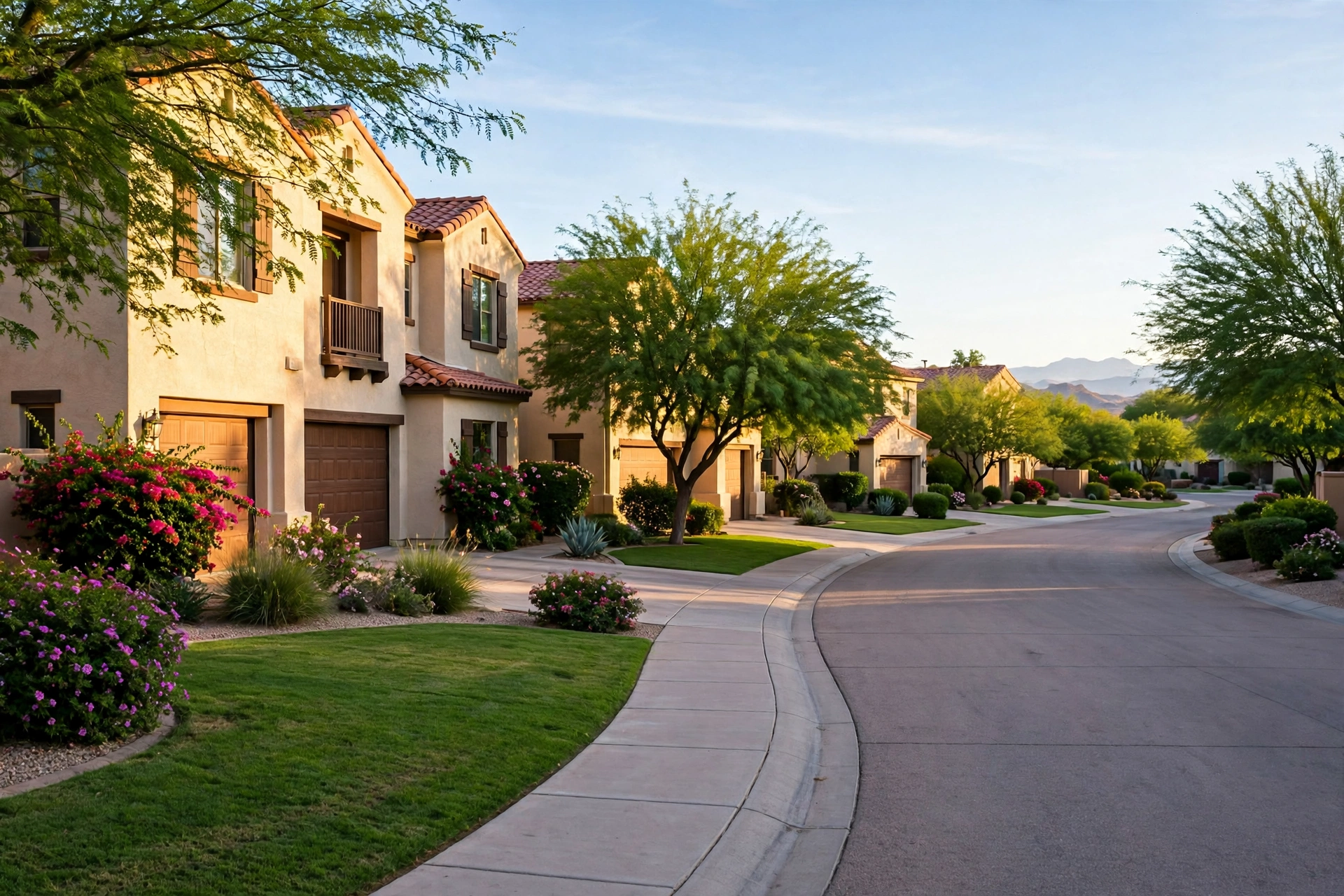
Valley Water Heater Pros connects Mesa homeowners with independent plumbing contractors who know the city's mix of older ranch homes and fast-growing east Mesa subdivisions. In the 85201 area, tanks battle 15 to 25 grains per gallon of hard water plus summer garage heat that can top 115 degrees, which is why local units average 6 to 10 years of service. From rumbling tanks to full replacements, contractors here handle repairs, flushes, and new installs across central and east Mesa.