Scottsdale Water Heater Service, Done Right the First Time
Scottsdale asks more of its water heaters than almost anywhere else in the Valley. South Scottsdale's water measures 16 to 20 grains per gallon, some of the hardest municipal water in Arizona, while North Scottsdale's luxury homes run high-demand systems with body sprays, soaking tubs, and guest houses that all draw from the same tank. Valley Water Heater Pros connects homeowners across the 85251 ZIP code with independent contractors who are fluent in both worlds.

Serving Scottsdale, AZ 85251
The throughline is unforgiving water. At 16 to 20 grains per gallon, mineral sediment accumulates fast enough to change how a tank sounds and performs within a year or two of skipped maintenance. Combine that with garage installs baking past 115 degrees every summer, and Scottsdale tanks live hard, short lives, typically 6 to 10 years, unless someone is flushing them yearly and watching the anode rod. The homes differ wildly from Old Town to North Scottsdale; the water chemistry does not.
Old Town Bungalows and Mid-Century Tank Setups
South Scottsdale's mid-century neighborhoods are full of character: low-slung ranch homes, mature landscaping, and water heaters that have been replaced two or three times since the house was built. Many of these homes still have the original garage layout, which means the tank sits where it always has, baking every summer and collecting dust every monsoon season. The setups are simple, which makes them straightforward to service, but the tanks themselves take the full force of 16 to 20 grain water.
Older homes in this area sometimes surprise contractors with what they find around the tank: mixed pipe materials from decades of piecemeal updates, shutoff valves that have not been turned in years, or venting that predates current standards on gas units. A <a href="/water-heater-repair">repair visit</a> is often the moment these details surface, and addressing them during a planned replacement keeps the next decade trouble-free.
If your Old Town area home still has galvanized connections at the tank, plan to update them when the tank is replaced. Galvanized fittings corrode from the inside, restrict flow, and eventually leak, and there is no better time to modernize them than when the plumbing is already apart.
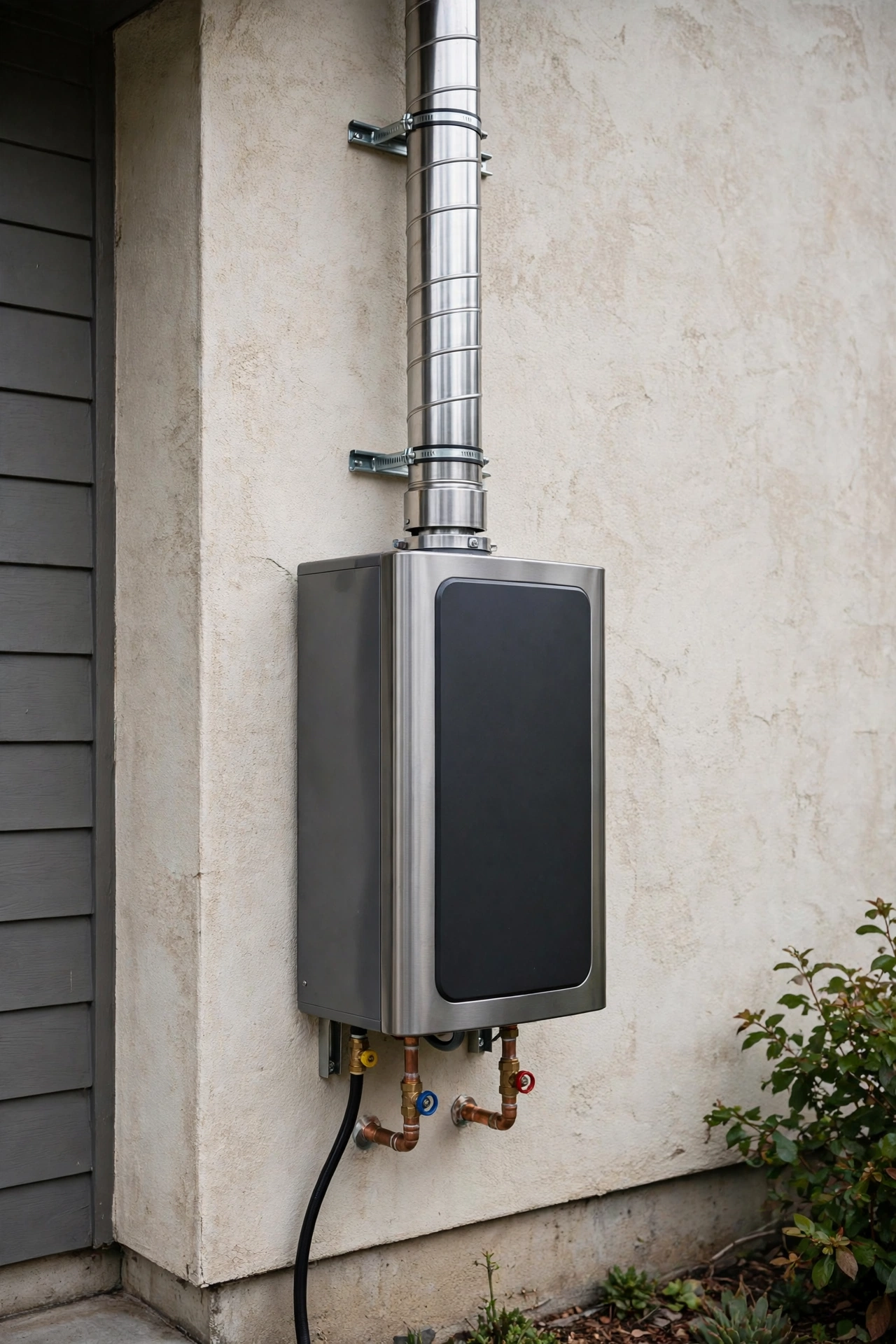
16 to 20 Grains per Gallon: Scottsdale's Hard Water Reality
To put 16 to 20 grains per gallon in perspective, water is generally considered hard above 7 grains. Scottsdale's south side runs at more than double that threshold, which makes it one of the most punishing municipal supplies in the country for water heaters. Every gallon heated leaves minerals behind, and in an unflushed tank, those minerals build into a concrete-like layer astonishingly fast.
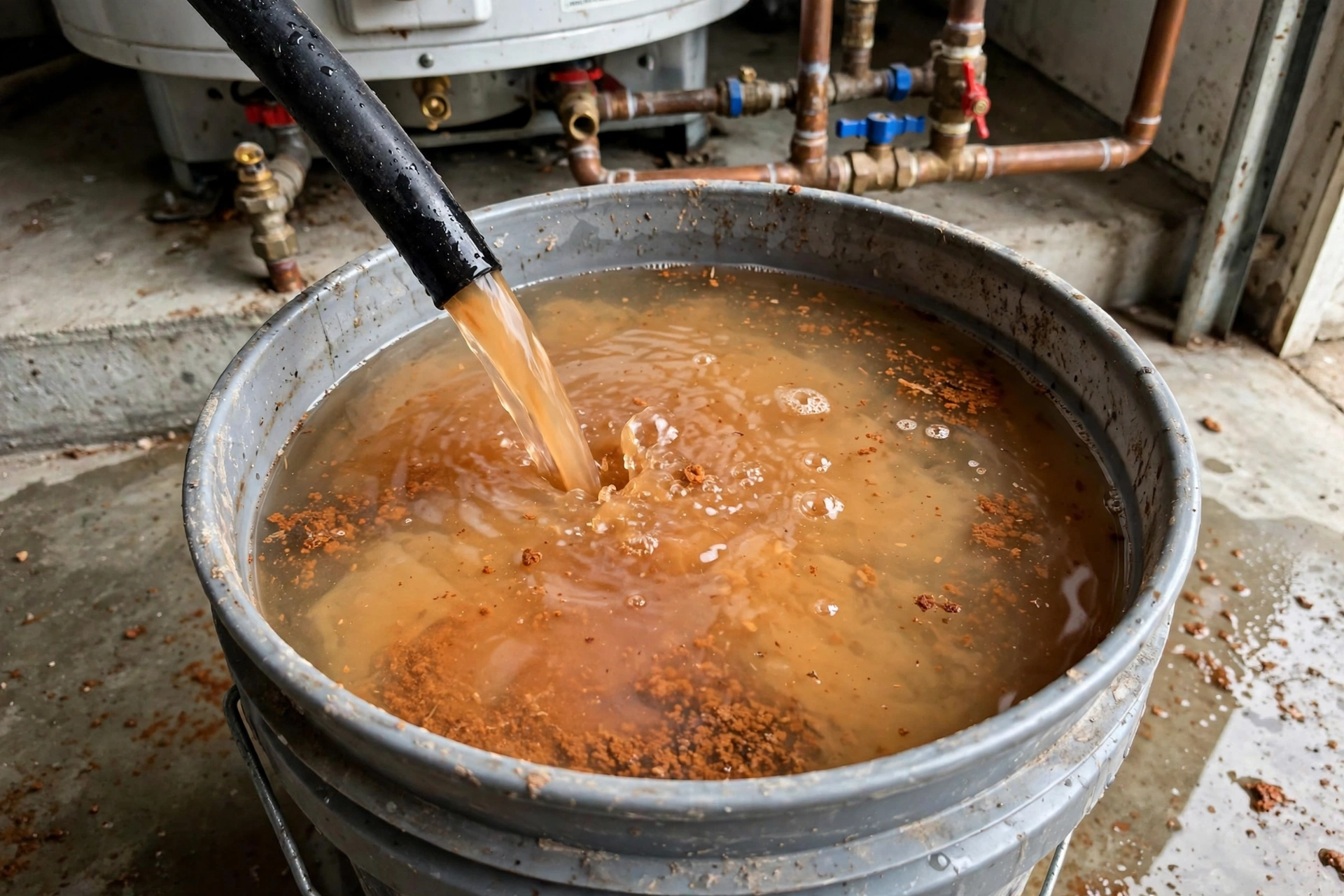
The consequences show up as noise first: rumbling, popping, and crackling as water boils through trapped sediment. Then comes performance loss, with showers going lukewarm sooner and the unit running longer cycles. Finally comes the shortened lifespan, because a tank heating through inches of scale is a tank working itself to death. This progression can play out in as little as five or six years without maintenance.
Annual <a href="/water-heater-maintenance">flushing</a> is not optional at this hardness level; it is the maintenance the equipment was designed around. And a water softener, common in Scottsdale homes for good reason, transforms the equation entirely. Softened water lets a tank live a far more normal life, which is why so many local contractors recommend treatment alongside any new install.
Renters and buyers evaluating Scottsdale homes can learn a lot from the water heater's condition. A quiet, well-maintained tank with service records suggests an owner who maintained the whole house; a rumbling, corroded unit in 16 to 20 grain water suggests deferred maintenance everywhere. During a home inspection, the water heater's age and state deserve more attention than most buyers give them.
North Scottsdale Luxury Homes and High-Demand Systems
North Scottsdale homes play a different game. Multiple bathrooms with high-flow fixtures, soaking tubs, outdoor showers, and guest casitas can draw hot water at rates that overwhelm a standard residential tank. These homes often need larger capacity, higher recovery rates, or multiple units working in zones, and the original builder's choice may not match how the current owners actually live.
High-demand households are also where tankless earns its keep. A properly sized tankless system, or a pair of them in very large homes, delivers continuous hot water no matter how many fixtures run at once. The sizing calculation matters enormously here: undersized tankless in a luxury home is a disappointment, while correctly sized it is transformative.
Whatever the system, hard water protection is the fine print that decides its lifespan. At 16 to 20 grains per gallon, an unprotected tankless heat exchanger scales fast, and even big tanks suffer. <a href="/tankless-water-heater-installation-repair">Tankless installations</a> in North Scottsdale should always pair with a descaling schedule and, ideally, whole-home water treatment.
Guest houses and casitas deserve their own hot water thinking. A separate small tank or tankless unit for the casita avoids running long lines from the main house and gives guests independent control. It also means a failure in one system does not leave the whole property without hot water. For homes that host often, zoned hot water is a quiet luxury that earns its keep.
Garage Heat Stress in South Scottsdale
Scottsdale garages are furnaces from June through September, with interior temperatures pushing past 115 degrees on the hottest afternoons. A water heater living in that environment faces stresses that cooler-climate tanks never see: accelerated corrosion, thermal expansion cycling, pressure relief valves working overtime, and insulation breaking down years early. The tank is essentially being cooked from the outside while it heats water on the inside.
Ventilation helps. Keeping the garage from becoming a sealed oven, ensuring the area around the tank has airflow, and not stacking storage tight against the unit all reduce the thermal load. These are small habits, but over a decade they add up to meaningful extra life.
Heat also affects the electronics on modern units: control boards, igniters, and sensors all prefer cooler operating environments. If your relatively young tank is throwing error codes every August, heat stress on components is a plausible culprit worth mentioning during a <a href="/gas-water-heater-services">service visit</a>, especially for gas units with electronic ignition.
Quiet, Efficient Units for Open-Plan Living
Scottsdale's open floor plans mean the water heater is never far from daily life, at least acoustically. A rumbling, popping tank in the garage carries through open living spaces in a way it never would in a compartmentalized house. Homeowners here notice water heater noise sooner, and they care about it more, which makes sediment maintenance as much a comfort issue as a longevity one.
Modern high-efficiency tanks run quieter than the builder-grade units they replace, with better insulation and more refined burners. When replacement time comes, noise is a legitimate selection criterion alongside capacity and efficiency. Ask the contractor about operating sound; the difference between units is real and noticeable in an open-plan home.
Placement tweaks can help too. Vibration isolation, keeping the tank from touching shared walls where possible, and addressing water hammer in the pipes all reduce the soundscape. A water heater should be heard never, or nearly never, and in Scottsdale's quiet luxury neighborhoods, that standard is worth holding.
When Switching to Tankless Makes Sense
Tankless is not right for every Scottsdale home, but it is right for more of them than owners assume. The clearest candidates are households with high simultaneous demand, homes where the tank's garage footprint could be reclaimed, and anyone tired of the replace-every-eight-years tank cycle. A well-maintained tankless unit can serve 15 to 20 years, roughly double a tank's local lifespan.
The honest caveats matter. Tankless needs correct sizing, adequate gas supply or electrical capacity, and disciplined descaling in 16 to 20 grain water. It also costs more upfront than a tank swap. What it buys is endless hot water, no standby heat loss through the summer, and freedom from the tank-failure flood risk.
The evaluation starts with your actual usage: how many showers, how much simultaneous draw, and what your water treatment situation looks like. A contractor who sizes from those answers, rather than from a rule of thumb, is the one to trust with the <a href="/water-heater-installation">installation</a>.
Seasonal Homes and the Empty-House Tank
Scottsdale has more than its share of seasonal residents, and an empty house is a particular kind of water heater challenge. A tank sitting idle through the summer still ages: sediment settles and hardens undisturbed, anode rods keep corroding, and seals dry out. Worse, a slow leak can run for months with nobody home to notice, turning a minor failure into major water damage.
Before leaving for the season, set the tank to vacation mode or pilot rather than shutting it off completely, and make sure someone, a neighbor, a property manager, a house watcher, lays eyes on the garage periodically. A thirty-second glance at the tank base every few weeks catches the leaks that become disasters.
On return, do not just fire everything up and hope. Run the hot water, check for discoloration and odor, and listen for new noises. Scheduling a <a href="/water-heater-maintenance">flush and inspection</a> at the start of each season is the routine that keeps a part-time home's water heater reliable year after year.
Property managers overseeing multiple seasonal homes should standardize the routine: same checklist, same timing, every property, every season. Flush, inspect, set vacation mode, verify the watcher schedule. When the checklist is identical across a dozen homes, nothing gets forgotten, and the fall return season stops producing emergency calls.
Pairing Water Treatment With Your Next Tank
In Scottsdale, the smartest water heater decision often is not about the heater at all. It is about the water going into it. A softener or treatment system that drops 16 to 20 grain water down to manageable levels does more for tank longevity than any brand choice or efficiency specification. Tanks on softened water routinely outlive their hard-water counterparts by years.
Replacement day is the natural moment to address treatment, because the plumbing is open and the contractor is already there. Even if a full softener is not in the plans, discussing options, from whole-home systems to simpler scale-reduction approaches, puts the new tank on the best possible footing from its first day.
For tankless units, treatment moves from recommended to essential. Heat exchangers scale faster than tank walls, and descaling a neglected unit is far more expensive than preventing the scale in the first place. Think of treatment and the heater as a system: each protects the other's investment, and together they are how Scottsdale homeowners beat the local lifespan odds.
Related: Water heater maintenance and flushing, Tankless water heater services, Gas water heater services, Water heater repair in Tempe, Water heater repair in Phoenix
Water Heater Questions in Scottsdale?
Tell us what your unit is doing and where you are, and we will help arrange the next step.
Is Scottsdale's water really that hard on water heaters?
Yes. South Scottsdale water runs 16 to 20 grains per gallon, more than double the threshold for hard water. That level of hardness builds sediment fast enough to affect performance within a year or two without flushing. Annual maintenance and water treatment make the biggest difference here.
How long should a water heater last in Scottsdale?
About 6 to 10 years for a tank unit in local conditions, with hard water and 115-degree garage heat doing most of the damage. Tanks that are flushed yearly, get timely anode rod replacements, and run on softened water reach the upper end of that range. Tankless units, properly descaled, can last 15 to 20 years.
My tank is loud enough to hear inside the house. Is that normal?
No, a quiet tank is a healthy tank. Rumbling or popping means sediment buildup, which is especially common at Scottsdale's hardness levels. A flush often restores quiet operation. If the noise persists after flushing, or the tank is old, the sediment may have hardened permanently and replacement may be the answer.
Do I need a water softener if I get a tankless unit?
It is strongly recommended. Tankless heat exchangers scale faster than tank walls, and at 16 to 20 grains per gallon an unprotected unit needs very frequent descaling. A softener stretches service intervals, protects efficiency, and is the single best way to reach the 15 to 20 year lifespan tankless promises.
What should I do with my water heater before leaving for the summer?
Set it to vacation mode or pilot instead of turning it fully off, and arrange for someone to check the garage periodically for leaks. An idle tank still ages, and an unnoticed leak in an empty house causes far more damage than the same leak found in a day. Schedule a flush and inspection when you return each season.
Why does only my hot water look rusty?
When cold water runs clear but hot water is discolored, the water heater is the likely source, usually a depleted anode rod letting the tank itself begin to rust. A contractor can inspect and replace the anode rod during a maintenance visit. If both hot and cold run rusty, the issue is more likely in the home's piping.
Water Heater Questions in Scottsdale, Answered
Not seeing your question? Request service and tell us what your unit is doing.
Request ServiceNearby East Valley Towns and Cities
 Hot Water, Handled
Water Heater Repair in Scottsdale
Valley Water Heater Pros connects Scottsdale homeowners with independent plumbing contractors experienced with the city's wide range of housing, from Old Town bungalows to North Scottsdale luxury homes. South Scottsdale's water runs an especially punishing 16 to 20 grains per gallon of hardness, and tanks across the 85251 area face garage heat past 115 degrees, holding local lifespans to roughly 6 to 10 years. Whether you need a fast repair, an annual flush, or a full system upgrade, local contractors handle it.