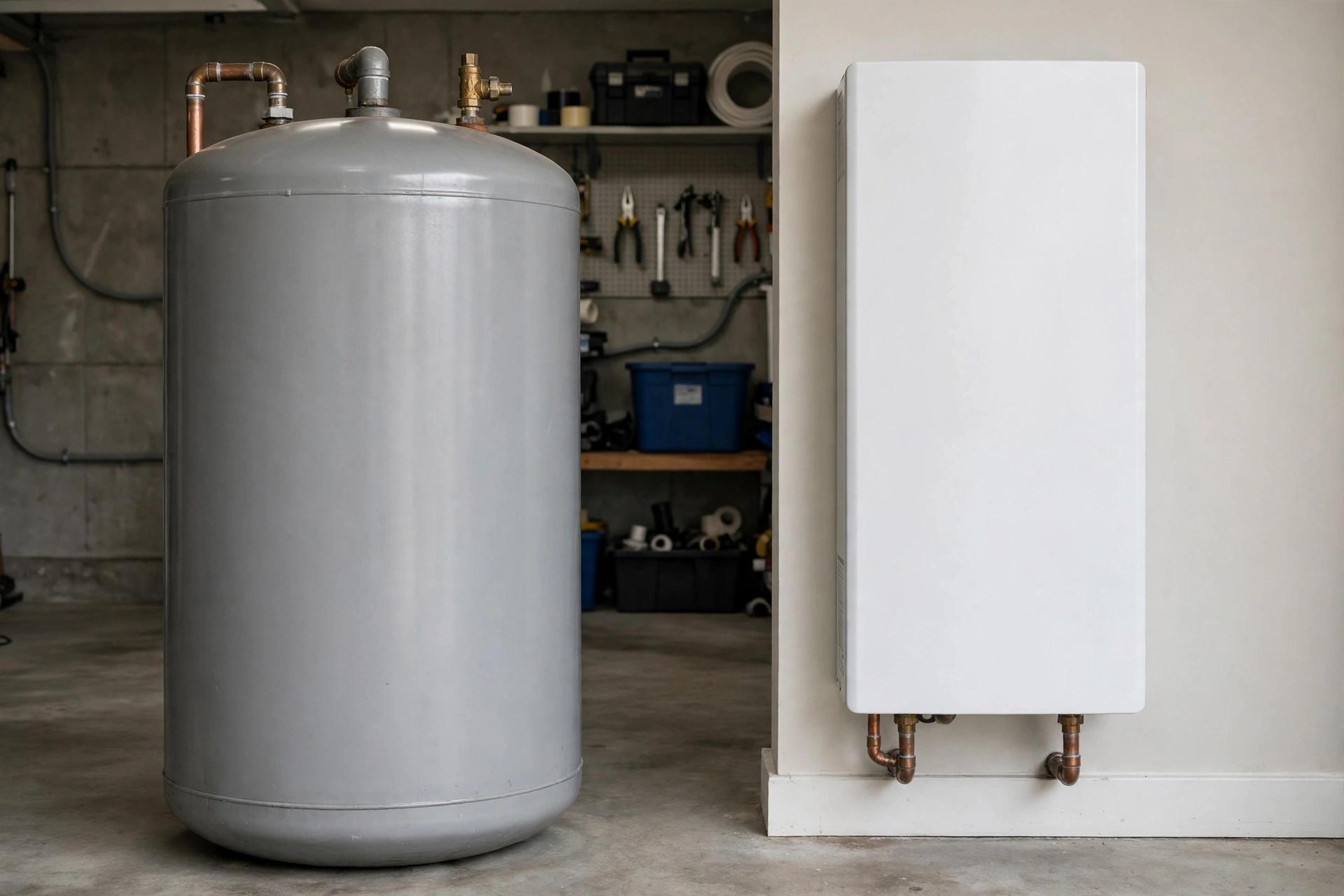
Tank vs Tankless Water Heaters in Arizona
In Arizona, a traditional tank water heater lasts 6 to 10 years and costs less upfront, while a tankless unit …
Learn moreMost Tempe homeowners ask about water heater lifespan only after the first cold shower or the first rusty puddle on the garage floor. In Arizona, the honest answer is shorter than the national averages you see on manufacturer websites. Heat, mineral heavy water, and garage installations all push equipment harder here than in milder parts of the country.
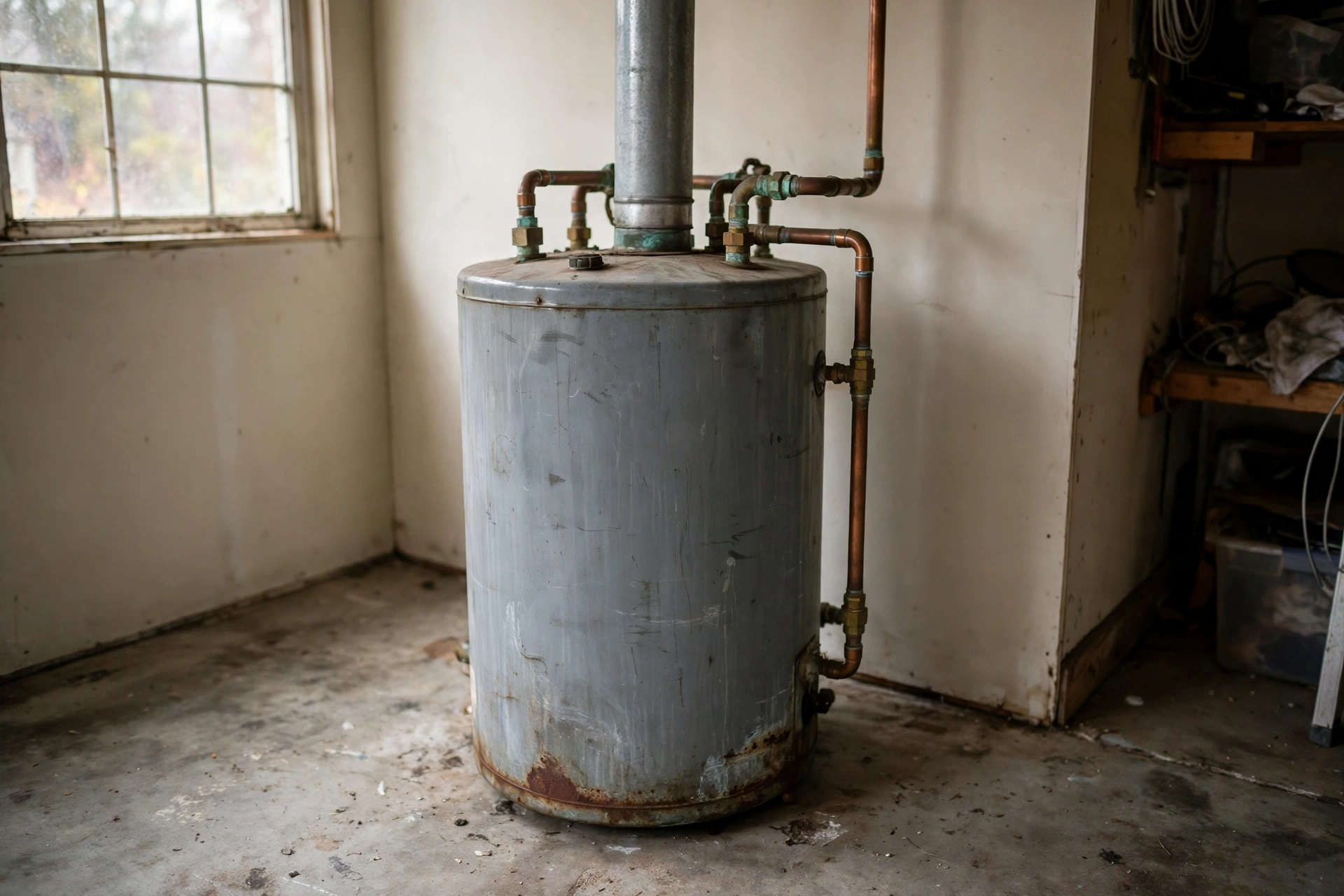
Knowing the realistic lifespan of your unit helps you plan instead of panic. A water heater rarely dies quietly. It sends warning signals for months, and if you know what those signals mean, you can schedule a replacement on your terms instead of dealing with a flooded garage in the middle of the night.
For a standard tank water heater in the Valley, expect 6 to 10 years of reliable service. Units that get yearly water heater maintenance and flushing tend to land near the top of that range, while neglected tanks in the hardest water zones can fail closer to year six. A tankless water heater typically lasts 15 to 20 years, but only when it receives annual descaling to protect its heat exchanger from mineral buildup.
Those numbers are lower than what you will hear from friends in the Midwest or Pacific Northwest, and the reason is simple. Arizona water is among the hardest in the country, and summer garage temperatures routinely climb past 115 degrees. Both of those factors shorten the working life of water heating equipment, so Tempe homeowners should plan around local reality, not national brochures.
Tempe municipal water generally measures 15 to 25 grains per gallon, which puts it firmly in the extremely hard category. Every gallon your water heater warms drops dissolved calcium and magnesium, and that mineral settles to the bottom of the tank as sediment. Over the years, sediment piles up into a thick layer that insulates the burner from the water, forcing the unit to run longer and hotter to do the same job.
That overheating is what kills tanks. The bottom of the tank expands and contracts with every heating cycle, and the glass lining inside eventually cracks under the stress. Once bare steel is exposed to hard water, corrosion takes over. Learning how to flush a water heater in Tempe hard water is the single best defense against this slow failure, because regular flushing clears sediment before it bakes into a permanent crust.
The 6 to 10 year figure assumes a glass lined steel tank with an anode rod that sacrifices itself to slow corrosion. In Tempe, the anode rod often depletes faster than expected because extremely hard water is aggressive on metal. Once the rod is gone, the tank wall is next, and pinhole leaks or a rusty seam usually follow within a year or two.
This is why a water heater that is eight years old with no maintenance history is living on borrowed time. A visit for water heater maintenance and flushing is the best way to check where yours stands. The tank may still heat fine, but the steel is thinner than it was on day one. If your unit is approaching the upper half of its expected life, it is smart to read up on the signs it is time to replace your water heater so you can recognize trouble before it becomes an emergency.
Related: signs it is time to replace your water heater, water heater maintenance and flushing
Tankless units avoid the standing water problem entirely, which is why they last so much longer. There is no tank to corrode and no sediment blanket to bake onto. Instead, water passes through a heat exchanger on demand, and the main enemy is scale coating that exchanger when very hard water flashes to steam inside it.
Annual descaling with a flush kit dissolves that scale and keeps the exchanger efficient. Skip it for a few years and the unit starts throwing error codes, running less efficiently, and cycling on and off. With steady descaling, a 15 to 20 year life is realistic even in Tempe water. Scheduling tankless water heater services once a year keeps that descaling on track. Without it, expect performance problems long before the unit should be done.
Related: tankless water heater services
You cannot change the hardness of Tempe water, but you can change how your water heater copes with it. These five habits are what separate the six year tanks from the ten year tanks, and they cost far less than a premature replacement. Our anode rod and Arizona hard water guide explains the rod check in detail.
Related: anode rod and Arizona hard water
A water heater does not need to be leaking to deserve retirement. Once a tank passes eight years in Arizona conditions, planning a replacement becomes a smart move rather than a reactive one. You get to choose the model, compare tank and tankless options calmly, and schedule the work at a convenient time instead of scrambling when the tank fails.
Age plus any symptom is a clear signal. Rumbling or popping noises, rusty water from hot taps, moisture around the base, or a pilot that keeps going out all mean the end is near on an older unit. Replacing on your schedule also lets you consider upgrades, like a high efficiency model or a tankless system, that are hard to evaluate during an emergency.
Read the guide, then describe your water heater problem and we will help arrange the next step.
Tank models usually last 6 to 10 years in Tempe because of very hard water and garage heat, while tankless units reach 15 to 20 years with annual descaling. Units that get yearly flushing and anode rod checks tend to hit the top of those ranges.
Yes. Tempe water runs 15 to 25 grains per gallon, and that mineral load builds sediment that overheats the tank and speeds up corrosion. Regular flushing is the best way to fight it.
If a tank is past eight years in Arizona conditions, planning a replacement is sensible even if it still works. Proactive replacement lets you choose your model and timing instead of dealing with a sudden failure.
Quick answers to the lifespan questions Tempe homeowners ask most.
Request ServiceIn Arizona, a traditional tank water heater lasts 6 to 10 years and costs less upfront, while a tankless unit …
Learn more
A pilot light that will not stay lit on a Tempe water heater is most often caused by a failed thermocouple, a …
Learn more
Monsoon season brings the year's toughest conditions for a Tempe water heater: wind gusts that blow out pilot …
Learn more