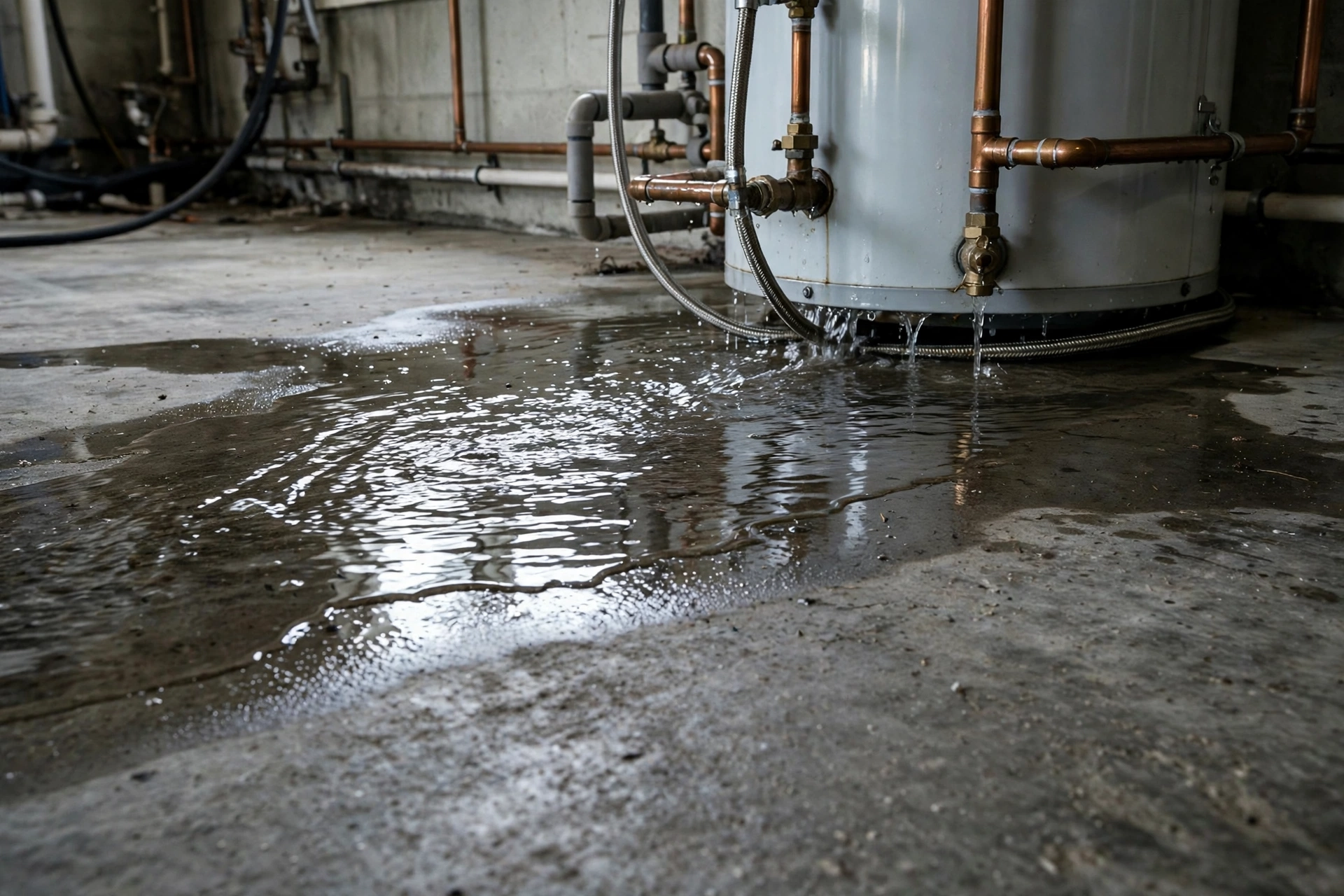
Water Heater Leaking: What to Do in Tempe
A leaking water heater in Tempe needs fast action because most units sit in garages where water spreads quickl…
Learn moreIf you live in Tempe, your water heater is quietly collecting rock. Every gallon of hot water you use leaves behind dissolved minerals, and with local water testing at 15 to 25 grains per gallon, that mineral load is enormous. Left alone, it settles into a sediment layer that makes your unit work harder, heat slower, and die younger.
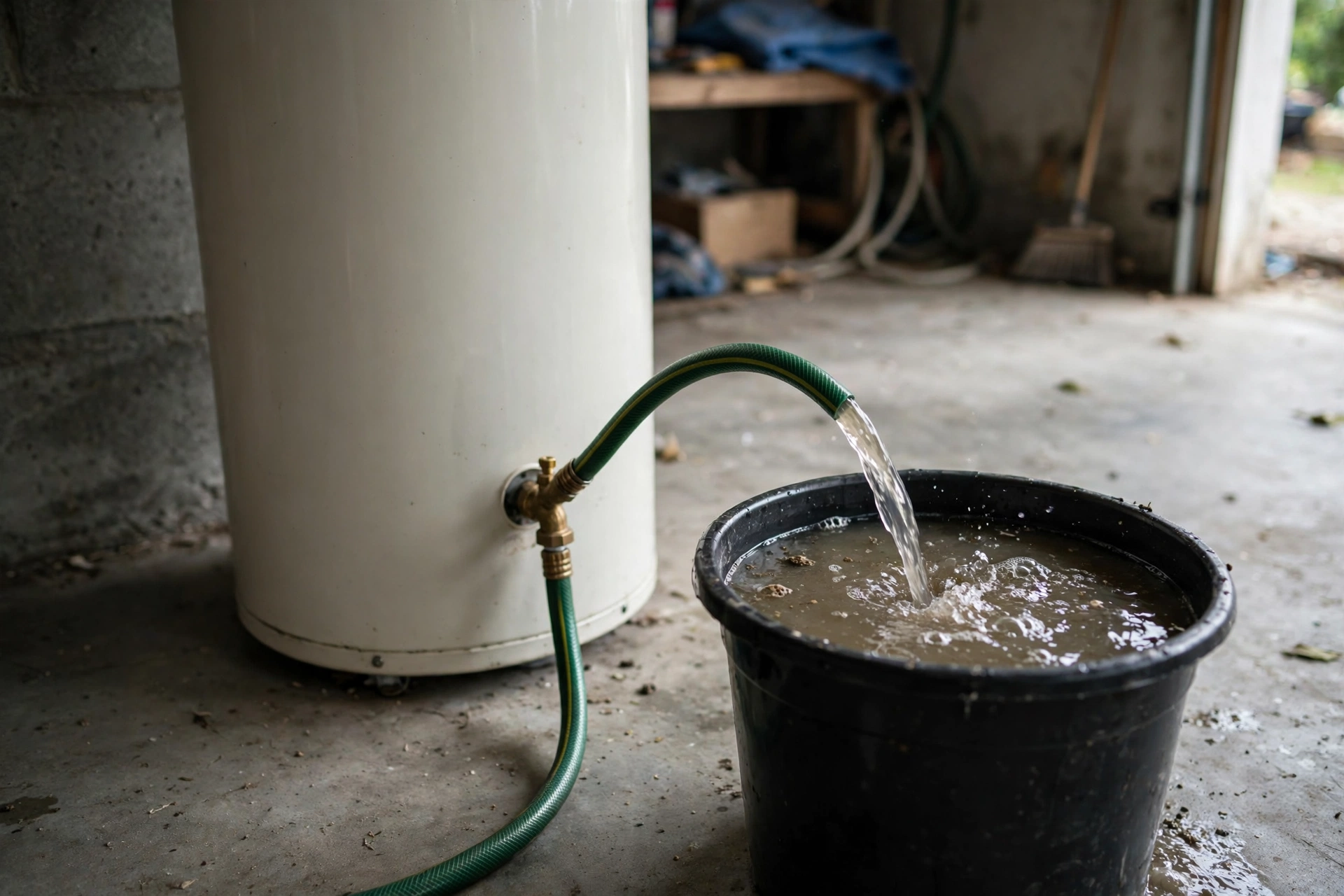
Flushing is the fix, and it is not complicated. Once a year, draining the tank clears out the sediment before it bakes into a hard crust on the tank bottom. This one habit can be the difference between a water heater that fails at year six and one that hums along to year ten.
Inside a tank water heater, the burner or heating elements sit at the bottom. Sediment settles in exactly that spot, forming an insulating blanket between the heat source and the water. The burner has to fire longer and hotter to push heat through the blanket, and the bottom of the tank overheats in the process.
Over time, that overheating makes the tank bottom flex and weakens the glass lining. You may hear the early warning as rumbling or popping sounds, which is trapped water flashing to steam under the sediment layer. Left alone, sediment also buries the lower heating element on electric models and can clog the drain valve itself, which is a problem when you finally do try to flush.
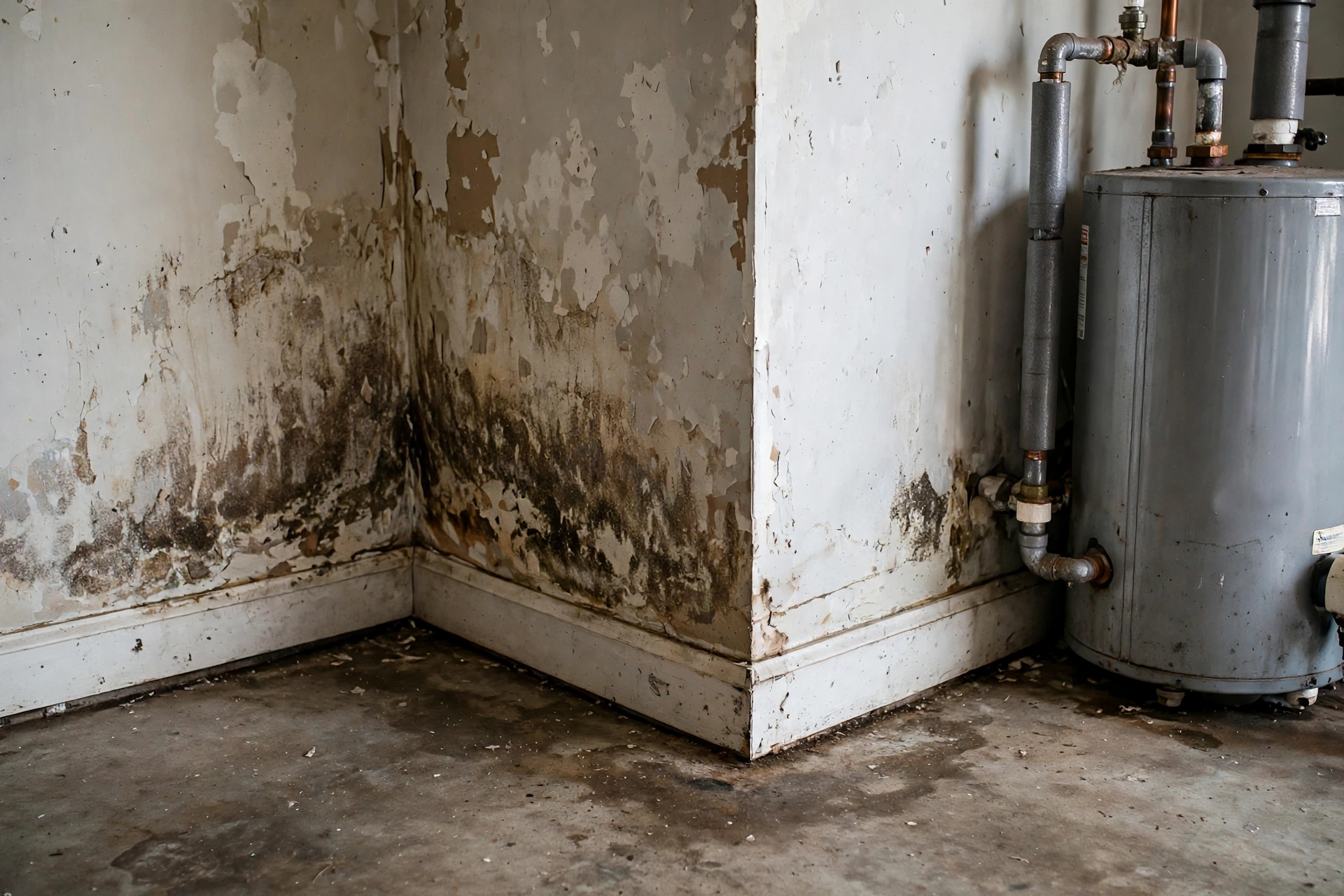
Once a year is the right schedule for most Tempe households. Homes with very high usage, like large families or homes with a hot tub fed by the water heater, may benefit from flushing every six to nine months. The honest test is what comes out of the drain valve: if the water runs cloudy or gritty after a year, annual flushing is not optional for your home.
Tankless units need a different rhythm. They do not store water, but scale still coats the heat exchanger, so they need professional descaling about once a year as part of regular water heater maintenance and flushing. If you are comparing systems, our guide on how long water heaters last in Arizona explains how descaling fits into tankless lifespan, and it is worth reading before you assume tankless means maintenance free.
Related: how long water heaters last in Arizona, water heater maintenance and flushing
A homeowner can do a basic flush with a garden hose and some patience. Turn the thermostat down or set a gas unit to pilot, then shut off the cold water supply to the tank. Attach a hose to the drain valve, run it to a floor drain or outside where hot water will not harm plants, and open the valve carefully.
Let the tank drain fully, then briefly open the cold supply to stir up remaining sediment and drain again. Repeat until the water runs clear. Close the valve, refill the tank completely, and only then restore power or turn the gas back to its normal setting. Never power up an electric unit before it is full, or you can burn out the heating elements in seconds.
Sometimes a flush tells you the unit is already in trouble. If the drain valve clogs with chunks and barely trickles, years of sediment may have solidified beyond what a simple flush can clear. If the water coming out is rusty, the tank lining may already be compromised and corrosion is underway.
A flush that produces a lot of grit is also a sign the anode rod is likely depleted, since the rod is what sacrifices itself to slow tank corrosion. Reading our anode rod and Arizona hard water guide will help you understand what the rod does and when it needs attention, because flushing and rod checks go hand in hand in hard water country.
Most American cities sit under 10 grains per gallon. Tempe runs 15 to 25, which means your water heater processes two to three times the mineral load of a typical unit. Add in garage installations that bake in 115 degree summer heat and long hot seasons that keep inlet water warm but working parts hot, and you have a perfect recipe for fast sediment buildup.
This is why maintenance schedules written for the national average fall short here. Local technicians see the proof constantly in tanks pulled years before their rated life. A tank that could go two years between flushes in soft water country needs annual attention in Tempe. The water coming out of your taps near Tempe Town Lake or down by ASU is the same mineral heavy supply, so no neighborhood gets a pass.
A straightforward annual flush is a fair DIY job on a relatively young tank. Call a professional when the drain valve is stuck or corroded, when the unit has never been flushed and is more than a few years old, or when you notice rust, leaks, or strange noises. Forcing a seized valve can break it and turn a maintenance task into a flood.
A professional flush on an older unit also includes an honest assessment. If the tank is near the end of its life, you will want to know the signs it is time to replace your water heater rather than spending maintenance money on a tank with months left. A good tech will tell you straight which situation you are in.
Read the guide, then describe your water heater problem and we will help arrange the next step.
Once a year for most households. Very high usage homes may need it every six to nine months. Tempe water at 15 to 25 grains per gallon builds sediment much faster than the national average.
Rumbling or popping noises, slower hot water recovery, and cloudy or gritty water from the drain valve all point to heavy sediment. Rusty water suggests the problem has gone beyond sediment to tank corrosion.
Yes, a basic flush with a garden hose is a fair DIY job on a young tank. Skip it and call a pro if the drain valve is stuck, the unit has never been flushed, or you see rust or leaks.
What Tempe homeowners ask about flushing sediment out of hard water tanks.
Request ServiceA leaking water heater in Tempe needs fast action because most units sit in garages where water spreads quickl…
Learn more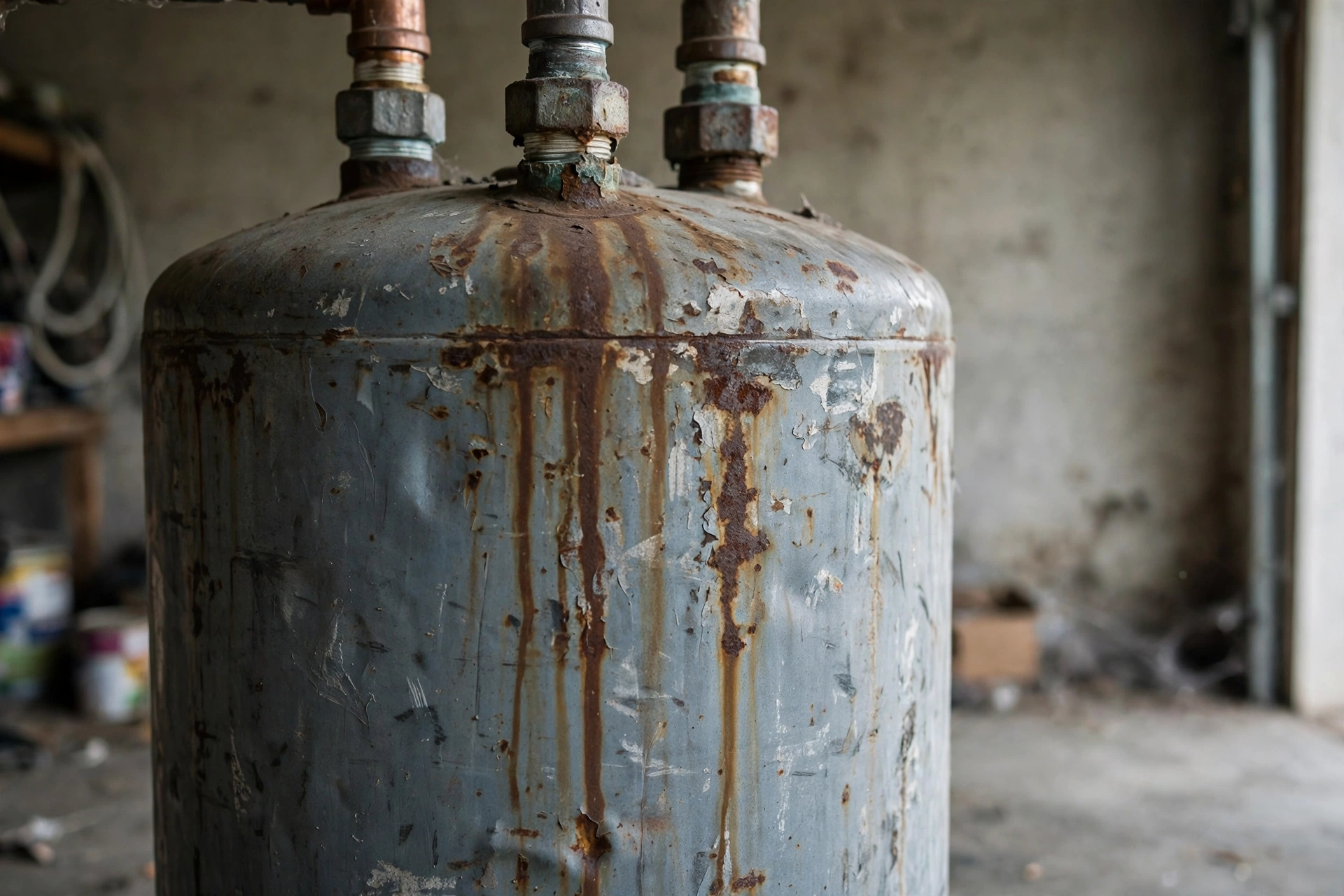
The clearest signs a Tempe water heater needs replacement are age past 8 to 10 years, rusty water from hot tap…
Learn more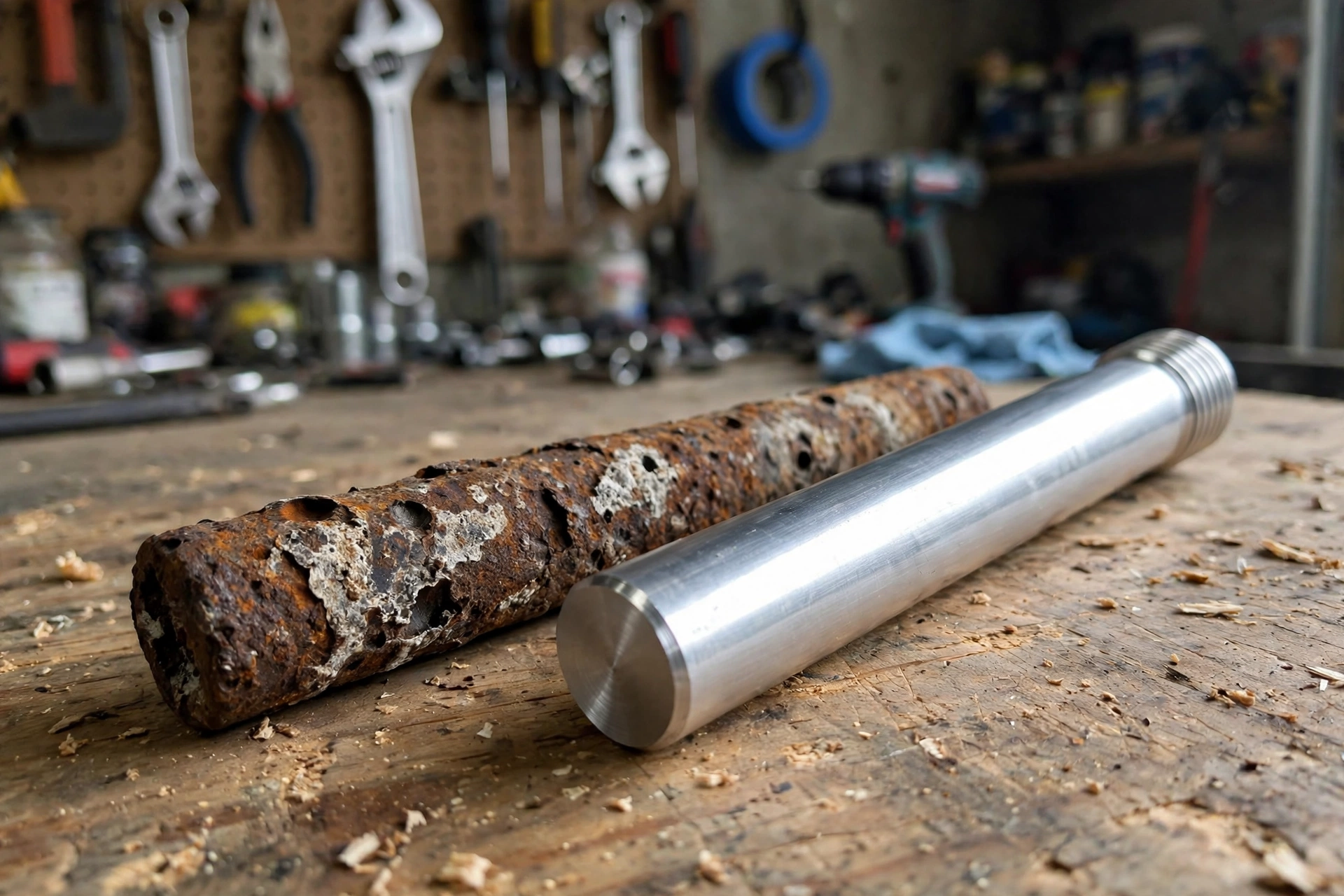
The anode rod is a metal rod inside your water heater that corrodes in place of the tank, and in Tempe's 15 to…
Learn more