Signs It Is Time to Replace Your Water Heater
The clearest signs a Tempe water heater needs replacement are age past 8 to 10 years, rusty water from hot tap…
Learn moreThere is a special kind of disappointment in turning on the shower and getting nothing but cold. Before you assume the worst, know that no hot water has a short list of usual suspects, and several of them are quick fixes. The trick is working through them in the right order instead of guessing.
This guide covers the most common causes for both gas and electric water heaters, with Tempe specific notes on how hard water and garage heat play into each one. You will know which checks to try yourself and which symptoms mean it is time to call for help.
Before anything else, confirm the basics. On a gas unit, check whether the pilot light is lit; a strong monsoon gust through a garage vent can blow one out. On an electric unit, check the breaker panel for a tripped breaker and the reset button behind the upper access panel, which trips when the water overheats.
Also check the thermostat setting. It should sit at 120 degrees. A thermostat that was bumped down or has failed can leave you with lukewarm water that feels like no hot water at all. If someone in the household recently used an unusual amount of hot water, the tank may simply need an hour to recover.
Do not overlook the household side of the equation either. A houseguest running back to back showers, a teenager discovering long showers, or a newly filled bathtub can empty a tank that is working perfectly. If hot water returns after an hour of no use, the unit was simply keeping up with unusual demand, not failing.
On gas water heaters, the pilot light is the usual suspect. If it will not stay lit, the thermocouple is the most common culprit. This small sensor shuts off the gas when it does not sense the pilot flame, and when it fails, it shuts off the gas even when the flame is fine. It is an inexpensive part, and gas water heater services can replace it in one routine visit.
Also verify the gas supply. Check that the gas valve to the unit is open and, if other gas appliances work, the problem is isolated to the water heater. A pilot that will not stay lit deserves its own troubleshooting, which our guide to pilot light problems in Tempe walks through step by step.
Related: pilot light problems in Tempe, gas water heater services
Electric water heaters have two heating elements and two thermostats, and they fail in predictable ways. A tripped breaker or a burned out upper element gives you no hot water at all. A failed lower element gives you some hot water that runs out fast, because only the top of the tank is being heated.
Sediment makes element failure more likely in Tempe. When 15 to 25 grains per gallon water drops its minerals, sediment buries the lower element and overheats it. If your electric unit is losing capacity gradually rather than all at once, sediment plus a struggling lower element is the likely combination.
If you are comfortable and the power is off, a visual check of wiring at the access panels can sometimes reveal a burned wire nut or scorch mark, but leave any actual electrical work to a professional. Water heaters and 240 volt circuits are not a learn as you go project.
The dip tube is a plastic pipe that carries cold incoming water to the bottom of the tank so it can heat. When it cracks or breaks, cold water mixes at the top of the tank and flows straight to your shower. The result is lukewarm water even though the burner is working fine.
Dip tube failure is sneaky and unlike a water heater leaking from the tank body, it leaves no puddle to warn you. A plumber can confirm it and replace the tube, which is a modest repair. On an older tank, though, a failed dip tube is often a sign that other plastic and rubber components are aging out too.
Related: water heater leaking
In Tempe, sediment deserves its own spot on the suspect list. A thick sediment layer insulates the burner from the water on gas models and buries elements on electric ones. Recovery slows to a crawl, and during high demand the tank simply cannot keep up, which feels exactly like running out of hot water.
Rumbling or popping noises during heating are the giveaway. If you hear them, the tank needs flushing, and our guide to flushing a water heater in Tempe hard water explains the process and when to let a professional handle it. Catching sediment early can restore performance; ignoring it shortens the tank's life.
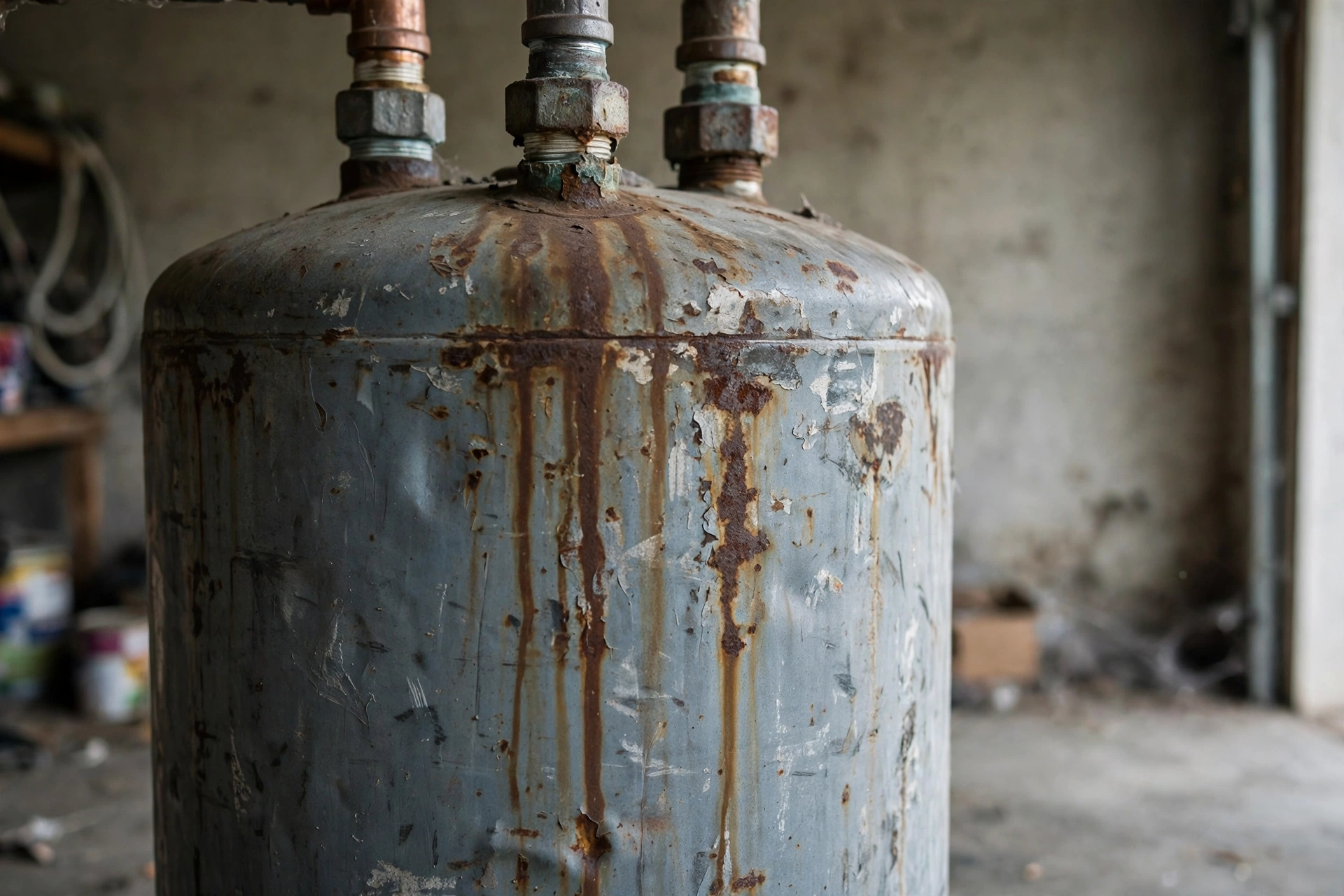
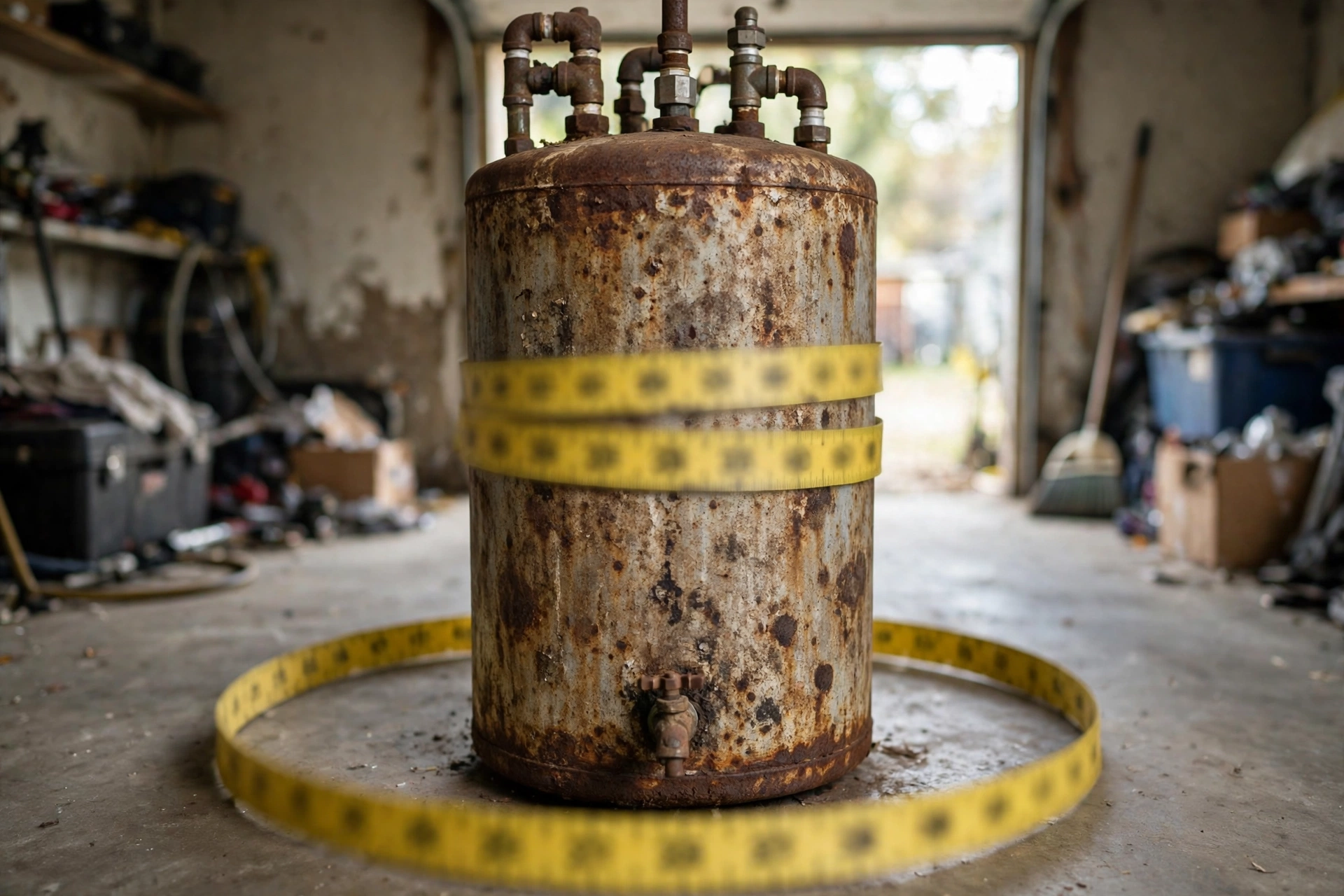
Sometimes the diagnosis is simple: the tank is done. A unit past 8 to 10 years in Arizona water that stops heating reliably is usually not worth a major repair. Internal corrosion, a failed tank lining, or a heat exchanger choked with scale can all reach a point where replacement costs less than chasing repairs. Replacing an aging tank proactively also lets you consider efficiency upgrades that are hard to evaluate during an emergency.
If your unit is in that age range, read the signs it is time to replace your water heater before spending money on parts. And if water is pooling around the base along with the cold showers, treat it as urgent using our leaking water heater guide, because a failed tank can let go all at once.
Read the guide, then describe your water heater problem and we will help arrange the next step.
The most common causes are a pilot light that went out, a tripped breaker, a failed heating element or thermocouple, a broken dip tube, or heavy sediment. Work through the simple checks first, then call a pro if the obvious fixes do not help.
Yes. Tempe's 15 to 25 grains per gallon water builds sediment that insulates the burner or buries heating elements, slowing recovery until the tank cannot keep up with demand.
On a tank past 8 to 10 years in Arizona conditions, replacement usually makes more sense than a major repair. Newer units get a proper diagnosis first, since the fix is often a simple part.
Quick help for the coldest problem a water heater can cause.
Request ServiceThe clearest signs a Tempe water heater needs replacement are age past 8 to 10 years, rusty water from hot tap…
Learn more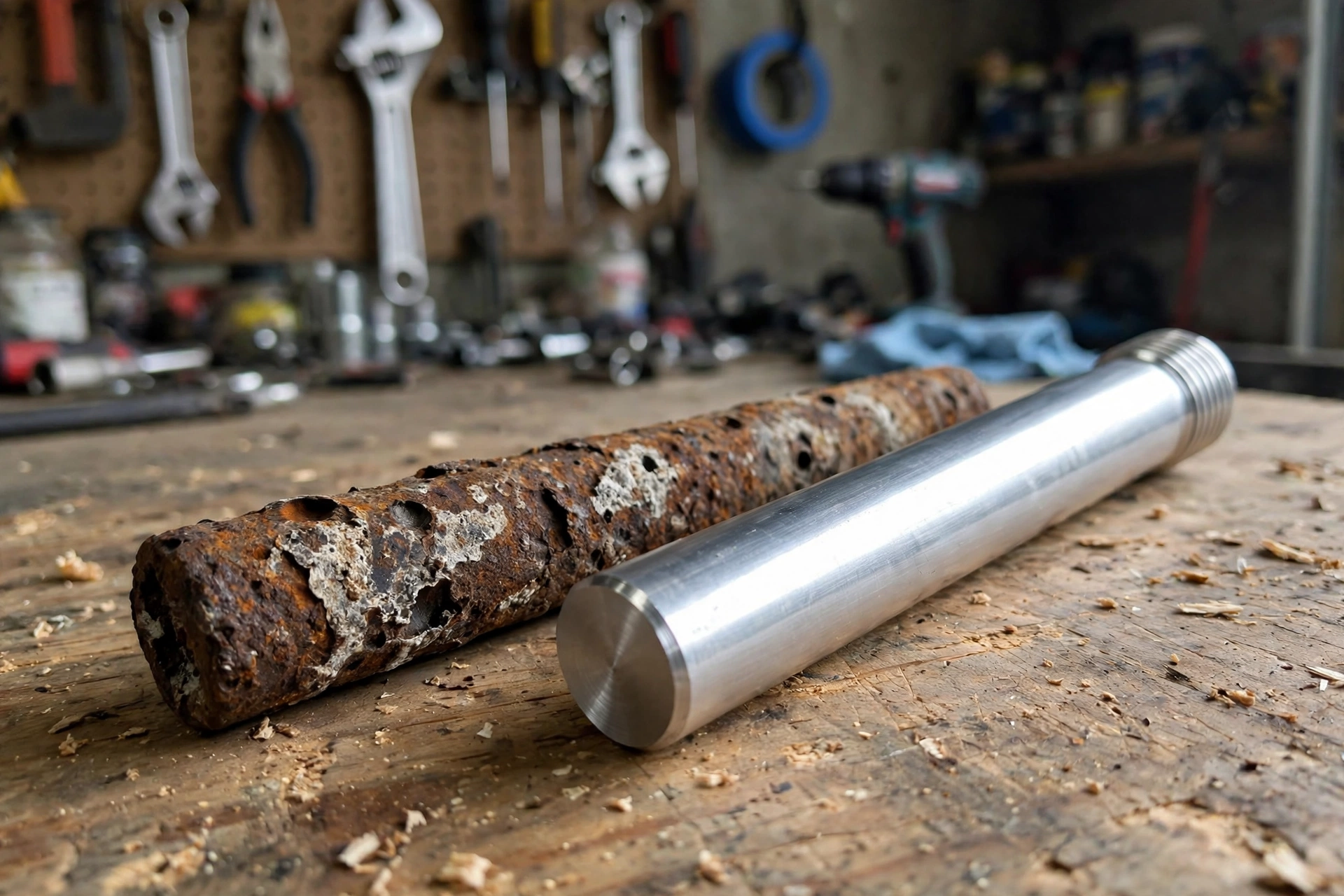
The anode rod is a metal rod inside your water heater that corrodes in place of the tank, and in Tempe's 15 to…
Learn more
In Arizona, a traditional tank water heater lasts 6 to 10 years and costs less upfront, while a tankless unit …
Learn more